
.avif)
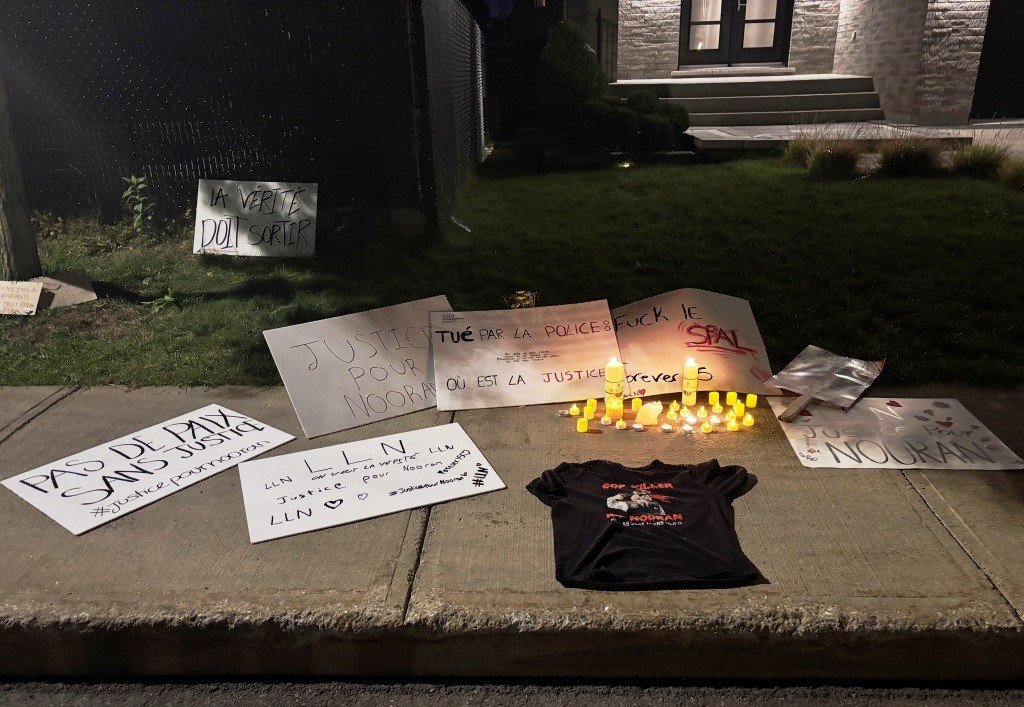
Rue Joseph-Daigneault in Longueuil – where Nooran Rezayi was shot by an officer from the Longueuil Agglomeration Police Service (SPAL). On Saturday, November 22, about thirty people gathered for a quiet ceremony. Between silence, prayers, and gestures of solidarity, a community tries to name a trauma that remains raw.
A freezing late afternoon, a grief that won’t pass
It’s just after 5 p.m. The cold suddenly falls over this residential neighborhood of Longueuil. Lighting is dim, almost absent, and figures slowly approach the corner where Nooran fell.
Two months have passed, but for the teenager’s friends, the tragedy is still vivid. They arrive in small groups. Some have their hoods up, others walk alongside an older figure. In front of the tree where Nooran collapsed, they light candles. The movements are short, hesitant. Words are even rarer.
Nooran’s family is also present – surrounded, but silent. Family lawyer Virginie Dufresne-Lemire reminds that no one can speak publicly while the Independent Investigations Office (BEI) investigation is ongoing. The mother stands back, eyes reddened from days of crying, her face marked but dignified.
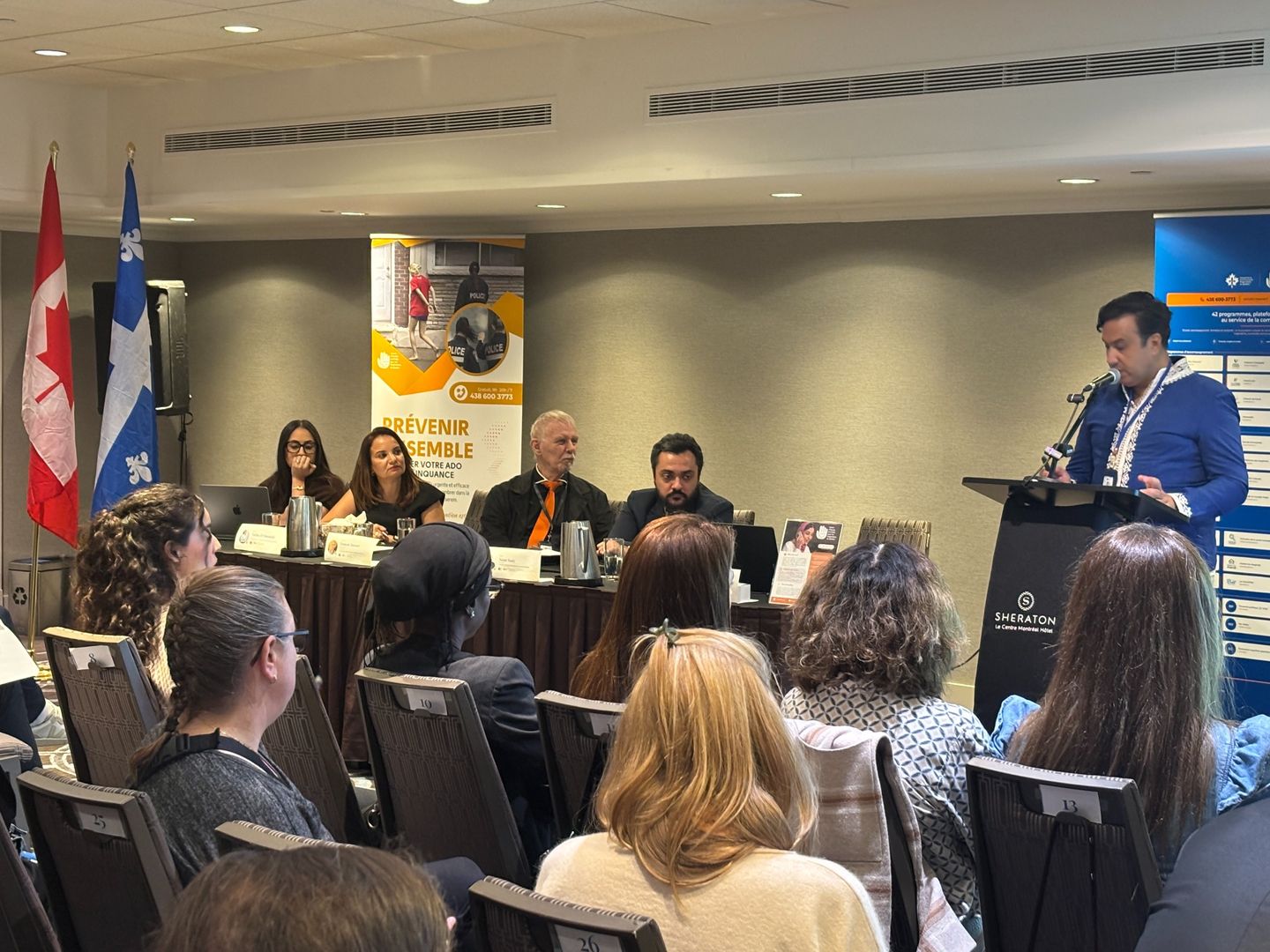
The ceremony, organized by the Montreal-based Binetna Center, which provides therapeutic support, is intended to be simple and respectful. Funeral prayers are recited. A short speech is delivered. The minute of silence stretches a little longer than expected, as if everyone has been lost in a memory or thought of Nooran. The ceremony ends after three-quarters of an hour. But the young people stay. They return in waves to the tree, stop to pay respects, and leave without a word.
“I want justice to be done”
Karim Rachouane, 16, clenches his fists in his coat pockets. He had known Nooran for several years. “He made everyone laugh,” the teenager recalls. “He wasn’t a troublemaker, you know, and when you found out he was in your class, you were happy. The teachers really liked him.”
The day before the tragedy, they were together at the nearby park. The next day, Karim learns the news seeing the police cars: “In my head, I thought, ‘It can’t be him. They got the wrong person.’” But the media confirmed it, he recalls. Shocked, he went home, isolated himself in his room, and stayed awake all night.
Today, Karim receives support at school and talks regularly with a mental health professional. But his anger remains intact. “I want justice to be done. We expect a severe measure against the officer, because Nooran was completely innocent—it was truly police brutality!” For Karim, the solution also requires more transparency: “Body cameras are needed. That way, this won’t happen again.”
He hesitates for a moment when asked if he sees a racial dimension to the tragedy. Then he affirms firmly: “Yes, 100%. Personally, I see a lot of racism in this. If it had been a Quebec-born youth in this situation, nothing would have happened. The police wouldn’t even have stepped out of the car. They would never have thought about pulling a gun and shooting a 15-year-old.”
A morning in the kitchen, an evening in silence
Earlier in the day, about thirty young people gathered at the Longueuil youth center. Under the supervision of a volunteer, they prepared shepherd’s pies to be distributed at the Brossard mosque.
“They all pitched in,” says volunteer Sana Mansouri, whose younger brother was close to Nooran. “Some had ideas to improve the recipe. You could see it made them feel good. A kind of pride.”
But when the conversation turns to her little brother, Sana’s tone changes. “It’s hard,” she says. “He struggles much more to express his emotions. There are impacts on his school grades, his behavior… You can feel it was a traumatic event for him; and I imagine for so many others.”
For her, the impact of Nooran’s death goes far beyond his immediate friends. “It affected the whole community. Many young people were impacted and somewhat left to themselves.”
Families do what they can, she says. But the sense of isolation remains, especially since media attention has faded: “We talked a lot at first. After, it became just a news item.”
The event organized that day aimed to create a moment of gathering. “It’s difficult to put into words what they’re experiencing. Sometimes actions help more than words,” adds Sana.
The Binetna Center on the front line
The community cooking activity took place at the Longueuil youth center during the day, under the supervision of Binetna Center staff.
Psychologist and founder Imene Staali has made it her mission to support Nooran’s friends from the day after the tragedy. For her, the wounds left by the young Rezayi’s death are deep and largely invisible among these youth. “[They] may have stomachaches without knowing why, have nightmares—they probably already do. These are young people losing concentration at school, and we worry whether they will stay in school or drop out. We fear they might face substance use issues, we fear for their health,” explains Staali.
A set of repercussions amplified by the lack of institutional recognition of what they are experiencing: “IVAC (Victims of Crime Compensation) and CAVAC (Victim Support Center) do not recognize police violence as a criminal act. These young people therefore cannot access these services.” And that is where the center steps in, she insists, to fill the gap and provide care. “We want to show them that Nooran is not forgotten,” she adds. “That we continue to honor his memory, and also respond to their needs.”
“We need institutions to take a stand”
Asked about the community’s needs, Staali maintains that one core element of collective pain is linked to institutional silence. She says the community expects a clear gesture, a statement acknowledging what happened. “We need the City and the government to denounce this as police violence,” she explains. She rejects the often-publicly stated idea that “police work is complicated.” “It’s not complicated not to kill a 15-year-old!” she exclaims.
According to the psychologist, a public stance would have a reparative effect. “We need them to speak out, to take a stand. The government also needs to listen to the youth’s needs. What are their needs? They need to be heard…” she says.
She stresses listening as much as support, but also repair: reparations for a community affected by Nooran’s death, for his relatives, for his friends. “Institutions must repair what happened. This affects an entire community, an entire ecosystem. Nooran’s friends need reparations.”
For her, repair also involves symbolic gestures: “Can we request a mural? Rename a park? It will never bring Nooran back, but these are beginnings of repair,” she says.
On the City of Longueuil side, Mayor Catherine Fournier’s office stated that support measures were deployed immediately after the tragedy. An emergency unit was established to coordinate interventions with young people, in collaboration with the Marie-Victorin school board, which mobilized psychologists and psychoeducators, according to a written response from the communications department.
The City of Longueuil says it was recently informed of concerns regarding some young people who may not have received the necessary help. “Our teams are working with partners to ensure all young people who express a need are supported,” the statement says. The City also plans to strengthen initiatives to connect with youth, encouraging students and their families to contact their school administration for assistance. “The CSSMV assures us that any student who raises their hand for support will be accompanied.” Confirmation or details from the Marie-Victorin school board could not be obtained.
The Binetna Center plans to continue its support. “If [the youth and their families] need us to come weekly, we will. Every month, we will hold a commemoration. We will be there,” concludes the center director.
Between pain and solidarity
.avif)
Throughout the evening, candles continue to burn at the foot of the tree. The youth stay in small tight-knit groups, speak softly, rarely to adults. They observe, listen, but exchange little with adults present. A palpable reserve, almost a mistrust, surrounds their conversations, as if speech that evening was only possible among themselves. In testimonies collected throughout the evening, two recurring feelings emerge: fear that this tragedy might happen again and anxiety that the system will fail to hear these young voices, who simply want to exist without violence.
Karim gazes long at the flames. Before leaving, he adds: “I came because it’s important. We cannot forget.”
Two months after Nooran’s death, his shadow still hangs over Longueuil. The BEI investigation continues, the family awaits answers, and friends are trying to return to school as best they can. On this poorly lit street, the cold settles in. But around the tree, the candles continue to burn, as if to ensure that, at least here, the light does not go out.