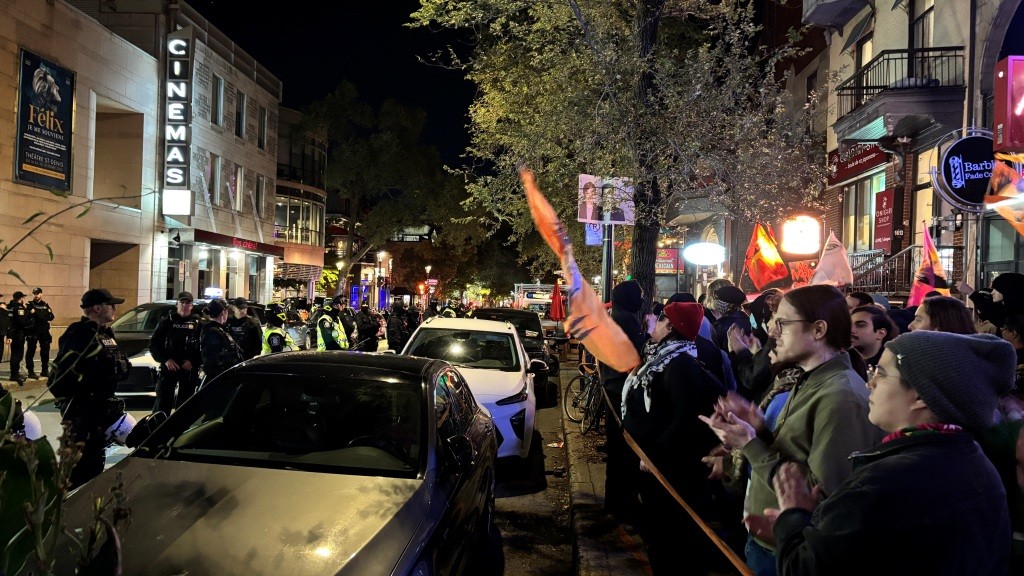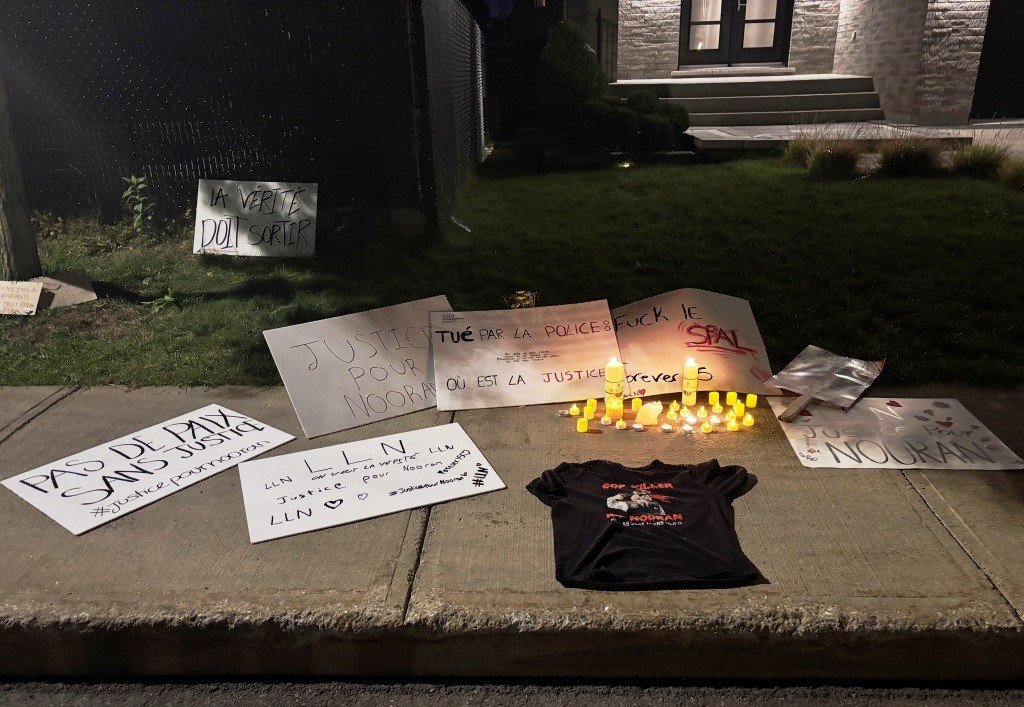


In the fall of 2020, the death, filmed live, of Joyce Echaquan at the Joliette Hospital caused a shock wave in Quebec. A few months later, in a context marked by international mobilizations against racism and by lively political debates on the recognition of systemic racism, the government presented an action plan entitled Racism in Quebec: zero tolerance. Five years and $180 million invested later, the government says that 100% of the 25 actions have been completed or are in the process of being completed.
But in a climate that is still polarized, marked in particular by the adoption of the Law on the secularism of the State and through recurrent controversies in the National Assembly, several actors in the community and legal sectors are contesting the real scope of this assessment, which they consider to be more administrative. According to them, it does not sufficiently measure whether progress has been made on the ground.
The Document published in February 2026 highlights several measures, including guidelines against arbitrary police stops, data collection on police interventions, awareness-raising campaigns in schools, improving equal access to employment, and creating housing for Indigenous students.
In this review, Christopher Skeete, Minister responsible for Combating Racism, declares himself “satisfied and grateful for the diligence with which the ministries and agencies involved have implemented the 25 actions recommended by the Action Group against Racism (GACR)”. This working group, created in June 2020, presented its recommendations six months later. Today, the ministry says it is observing “the very concrete results of this collective mobilization. [...] these efforts advance the fight against racism and contribute to building a more equitable, more inclusive and more united Quebec.”
Nevertheless, several voices denounce a discrepancy between government accountability and the realities experienced on the ground. For several measures, it is difficult to judge whether they have had concrete and measurable effects. For example, have police stops deemed discriminatory decreased? Has access to employment or housing improved?
To use a simple analogy, you can say that a hospital has implemented a new protocol, trained staff, and purchased equipment, but are patients receiving better care on a daily basis?
Asked about this gap between tools and measurable effects, the ministry says, through its communication department, “acting with the tools at our disposal, and that involves laws and action plans.” In particular, he cites a governance scholarship program, the increase in the representation of visible minorities on the boards of directors of Crown corporations, awareness campaigns in sport and the improvement of access to interpreters in Aboriginal languages to facilitate access to justice.
$180 million: where does the money go?
The balance sheet shows that more than $180 million was invested over four years by the various departments and agencies that contributed to the implementation of the GACR action plan.
Thus, $36.45 million was invested to provide adult students and Indigenous students with housing that is culturally adapted to their needs in Sept-Îles, Trois-Rivières and Quebec City, so that access to housing is not an additional concern during their studies.
Cyrille Ekwalla, director of the Institut NéoQuébec, wonders about the concrete distribution of the amounts. “It is not the amount that impresses me. Rather, it is: what did you allocate this sum to? As someone who is subject to discrimination, I don't see these 180 million people.”
After examining the detailed expenditures of the last four years, obtained by La Converse, one observation is clear: $100 million (or approximately 55% of the total budget) was devoted to a single measure, namely the recognition of diplomas of immigrants.
At this stage, these steps led to the signing of an agreement with Switzerland and to talks with five other countries. Refresher training, among other things to facilitate the recognition of skills, also helped to speed up the process. The report shows that more than 1,300 people have “settled, with the members of their family, in all regions of Quebec, in order to follow additional training or an internship in a clinical environment and, then, to be hired into the health network as nurses”.
Recall that the former minister responsible for the fight against racism, Benoit Charette, emphasized in Press briefing, in December 2021, that the recognition of achievements was a major part of the plan and “probably the most important” to “ensure that we do not waste potential”. A few days earlier, Jean Boulet, then Minister of Labour and Immigration, presented A plan for recognition the skills of immigrants, with an envelope of $130 million. These amounts are now part of the investments included in the anti-racism plan.
Asked about this, Maxim Fortin, a researcher at the Institute for Research in Socio-Economic Information (IRIS), sees it as “something evocative”. For him, “it reflects how the government sees the problem.” Even if, in his opinion, the fight against racism “is not a problem in terms of the quantities of money put on the table, but a qualitative problem”, Mr. Fortin considers that the emphasis placed on integration into the labor market reflects the tendency of the Coalition Avenir Québec to read the fight against racism primarily economically. “We get around the issue of deprivation of rights by focusing on functional integration,” he adds..
Fight against racism: a symbolic ministerial function, without a real portfolio
“The government must be an example in the fight against racism, using the levers at its disposal directly.” This is what the GACR Action Plan states. Among its recommendations, there is the appointment of a minister responsible for the fight against racism, in order to increase accountability for the results of the actions implemented.
Although a minister now sits on the Council of Ministers with this mandate, there is however no ministry with an autonomous budget comparable to other portfolios. Rather, responsibility lies with an Office for Combating Racism, which is responsible for coordinating the actions of 11 ministries and agencies.
According to data sent to La Converse by the ministry's communications department, the amounts dedicated to the Office increased from approximately $400,000 in 2021-22 to $649,100 in 2025-2026. These amounts mainly cover operating costs and the remuneration of a coordinator and a few strategic advisors.
By way of comparison, the government's balance sheet shows that more than $180 million was invested under the plan, i.e. amounts distributed between various ministries. The Office does not directly manage them, but rather monitors and coordinates them. This architecture raises a question of accountability: who is responsible for the results if the objectives are not met?
For Andrés Fontecilla, deputy for Quebec Solidaire, this configuration can be justified since racism crosses several fields of action. But “by giving the mandate to verify progress with few resources, we can question the political will,” he said.
The ministry replies that the Office has “a team dedicated specifically to following up with ministries and agencies”, in addition to managing certain initiatives such as the establishment of mandatory training on racism for State employees and Price for a racism-free Quebec.
Safa Chebbi pushes the criticism further. According to the coordinator of the Quebec Observatory of Racial Inequalities, the creation of a delegated ministry without a substantial budget or clear decision-making power can be a symbolic act of staging.
Racial profiling: a concrete test
The first of the 25 actions concerns police stops and racial profiling. On this point, the criticism is head-on. For Lynda Khelil, who is responsible for political issues at the Ligue des Droits et Libertés (LDL), the results confirm a refusal to tackle the root problem. “The Quebec government does not take the problem of racial profiling seriously at all seriously, she says. It's linked to the fact that he refuses to recognize that racism is a systemic phenomenon.”
The ministry replies by saying that it has taken “concrete actions on several fronts”, in particular by adopting guidelines for police stops, adding social workers to police forces and improving continuing education. “Several of these measures have already borne fruit and will continue to do so in the long term,” he said.
The Minister's response does not include any examples of these “fruits”; to which must be added the fact that no independent conclusion on the reduction of profiling is included in the balance sheet.
On the other hand, for the League, this approach does not solve the root of the problem. “We cannot
Do not regulate an arbitrary practice, argues M.Me Khelil. All arrests are violations of rights. There is not a good arbitrary interpellation and a bad arbitrary interpellation. They are all to be avoided.”
In the government document, an interpellation is presented as “an activity.
allowing police officers to do their job properly.” For the League, this framework implicitly legitimizes the practice of interpellation, which, unlike arrest, is part of an area of great police discretion.
Housing, employment, justice: blind spots?
The Government states that it has strengthened protection against discrimination in housing, improved equal access to employment and increased the training of public officials. However, according to several speakers, the measures remain largely informative or formative. “We see a lot of actions based on training,” observes Safa Chebbi. Except that, she adds, “training does not solve the problem in depth.”
She believes that racism is often treated as an individual phenomenon, citing the example of the “police officer who acts badly”, rather than as a set of institutional biases.
Cyrille Ekwalla agrees. “Why are acts of discrimination not more clearly condemnable? Why not move towards stronger legislative changes? ” he wonders.
On the issue of housing, the ministry maintains that “all legislative tools are in place” and invites citizens to turn to the Commission des Droits de la Personne et des Droits de la Jeunesse to obtain justice. This is answered by the solidarity deputy Andrés Fontecilla, who believes that the government “could go further” than simply informing tenants about remedies in the area of discrimination, in particular by applying more stringent measures.
Between administrative balance sheet and social transformation
The debate is part of a wider political context. The Coalition Avenir Québec, in power since 2018, refuses to recognize the existence of systemic racism or the Joyce's principle.
For the organizations consulted, this position influences the nature of the measures adopted. “If we do not recognize that racism is systemic, we will propose cosmetic measures”, believes Lynda Khelil.
Five years after “Zero Tolerance”, the government presents an administrative apparatus in motion: guidelines, training, campaigns, committed budgets. Advances are sometimes encrypted. As of October 30, 2025, the presence rate of members of visible minorities for the entire public service was 16.1%, equivalent to 96.9% of the 2028 target.
Critics do not deny the existence of these advances. “You cannot throw everything in the trash, recognizes Safa Chebbi. There are steps forward.” But the fight against racism cannot be reduced to a series of recorded actions. “The need is even stronger than before,” says Cyrille Ekwalla, referring to an international context marked by identitarian withdrawal and the trivialization of certain discourses.
Now that the government has established its final balance sheet, the question remains: has Quebec transformed its institutions or has it primarily documented its efforts?