
In Montreal, a map is taking shape from stories. Not an administrative map, nor an urban promotional tool, but a lived-in map, particularly by young immigrants who share their relationship with places, encompassing belonging, obstacles, and reappropriation.
On March 19, AFS Interculture Canada unveiled the project "Montreal Mapped by the Experiences of its Diversity." This collective tool offers an interpretation of Montreal through the eyes of those who traverse it, settle there, and strive to find their place. Behind this initiative lies a specific problem: for many immigrants, the city initially appears as a fragmented, hard-to-read space, where resources are scattered and landmarks are absent.
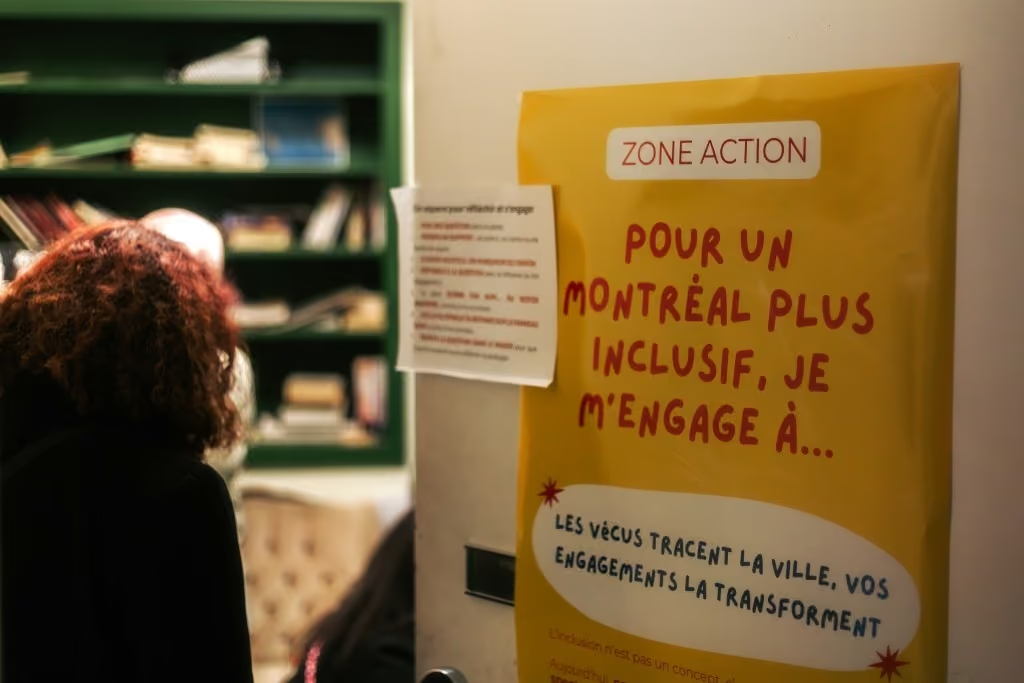
Café La Ligne Verte, located on Ontario Street East, between Frontenac and d’Iberville, quickly fills up. Dim lighting, closely set tables, and hushed conversations gradually fade. In the back, a small stage, usually reserved for artists, this time hosts the project leaders and participants who have come to share their own urban experiences.
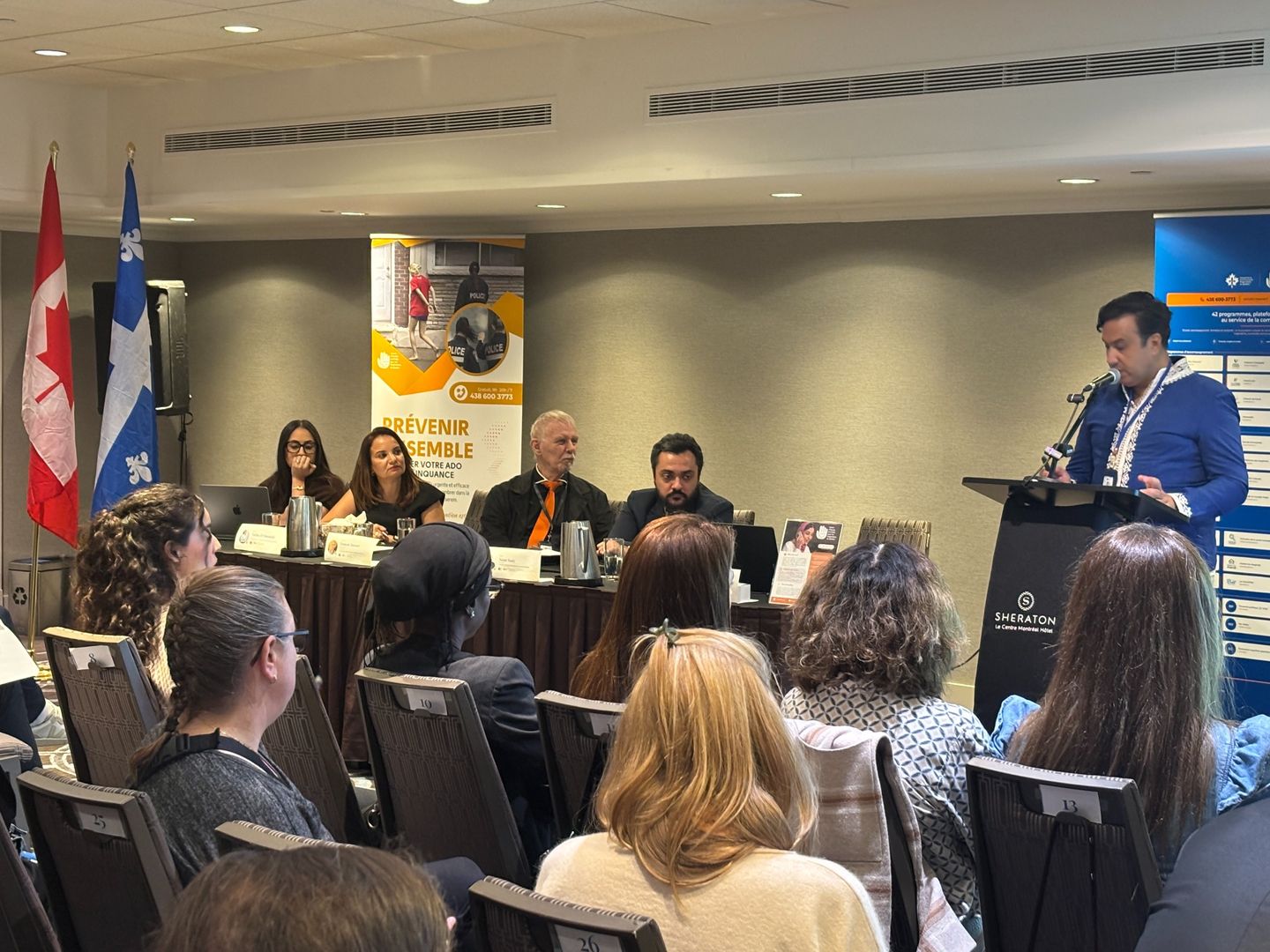
Vanessa Valderrama, Director of Intercultural Competencies at AFS Interculture Canada, begins by explaining the purpose of the evening. Presented as the culmination of 10 months of work, " Montreal Mapped by the Experiences of its Diversity" is an interactive map that lists over a hundred places deemed inclusive by their users. There are surely more, and in fact, this tool is designed to be evolving. It can therefore be enriched and corrected so that everyone can make it their own. In any case, beyond these geographical points, another issue emerges: the link between the migratory experience and Montreal's urban space.

Photo: Melissa Vaitiligame
"Belonging isn't decreed; it's built, place by place." This idea, conceived by the map's initiators, structures the project. For an immigrant, the city doesn't immediately exist as a coherent whole; they first perceive it as a succession of anonymous spaces – an environment where one can reside without necessarily belonging.
A Space to Say What Isn't Said Elsewhere
This type of initiative falls within the broader framework of the equity, diversity, and inclusion (EDI) policy adopted by the City of Montreal to promote territorial equity, access to services, and the fight against discrimination.
However, these objectives rely on a rarely stated condition: the people concerned must still know where to go, which places to turn to, and how to navigate the city. The concrete legibility of the territory is precisely this blind spot that the project seeks to address.
The project is being carried out as part of the Montreal Inclusive 2025-2026 call for projects, launched by the City of Montreal and the Ministry of Immigration, Francization and Integration (MIFI), with an overall budget of $4 million for the entire Montreal territory. The objectives of this initiative include fostering harmonious intercultural relations and combating racism and discrimination. This aligns perfectly with the interests of AFS Interculture Canada, which has been present in Quebec for nearly 50 years, focusing on developing intercultural competencies and youth civic engagement.
The idea stems from an observation: young immigrants have few spaces to recount complex, often ambivalent experiences. "The goal was to create a safe space to discuss difficult topics," explains Vanessa Valderrama.
From Workshops to the Territory, the City Becomes an Experience
Over 10 months, nearly 500 participants aged 18 to 35 took part in more than 40 workshops on topics such as racism, discrimination, intercultural communication, and stereotypes, according to the project manager.
In the room, gazes converge, a sense of listening settles in, and laughter occasionally ripples through, sparked by an anecdote or a lighthearted remark. Attention doesn't wane. As testimonies follow one another, the distance between the stage and the audience shrinks.
Macarena Figueroa, who arrived from Chile less than two years ago, recounts discovering these workshops while taking French language courses. "I was looking for a place to practice French. But it became something more." This "something more" is actually a space where the migratory experience can be articulated, shared, and collectivized, she explains, which remains difficult within typical institutional settings.
And the project doesn't stop at words; it transforms them into a tool. "We didn't want the discussions to remain abstract. The idea was to move towards something concrete," states Ms. Valderrama in an interview.
Belonging is Built, Place by Place
This concrete aspect takes the form of an interactive map, collaboratively built by participants, on which each person marks significant places: those where they felt welcomed, recognized, and legitimate. Macarena, for example, adds a library, a community center, and a café in Rosemont that offers discounted food boxes. "Many immigrants face economic difficulties. Knowing about places like this is important," she confides.
Souleymane Bouchet, who arrived from Senegal at the age of eight, for his part, marks dance-related spaces on the map: studios, parks, and public squares. "Dancing is a way to come together. You can go to Place des Arts, there are always people dancing," he recounts. He also mentions the Montreal International Jazz Festival, where "all communities gather." These places function as convergence points in an otherwise segmented city.
For Esteban Bongiovanni, Executive Director of AFS Interculture Canada, the stakes go beyond simple mapping. "It's about giving participants the opportunity to leave a mark, both individually and collectively." This mark involves transforming how the city is viewed, so that places are no longer just functional, but become platforms for experience.
A Fragmented City, Identifiable Contact Points
The project doesn't explicitly highlight the city's social and cultural fragmentation, which often leads to communities coexisting without fully interacting. However, by offering spaces for dialogue and mapping inclusive places, the map implicitly shows that these are either lacking or insufficiently visible. "We wanted to create connections," explains Vanessa Valderrama, "between people of different origins, but also with the host society." The workshops, cultural outings, and collective activities all contribute to this networking.
One activity particularly well illustrates this transition from experience to action: blackout poetry. Based on news articles that presented a negative view of immigration, participants were invited, recalls Ms. Valderrama, to black out with a marker the words they rejected, keeping only those they wished to compose with. From these preserved fragments, new texts emerge, poems constructed from initially stigmatizing discourses. The gesture is simple yet structuring: transforming a received discourse into reappropriated material.
Another testimony shared by the project manager recounts a clinic where a hearing-impaired person felt welcomed despite their apprehensions. This type of story reveals a central dimension: inclusion doesn't solely depend on policies, but on their concrete implementation in specific interactions. Each point on the map thus becomes a micro-narrative.
What is this tool actually for?
The map does not resolve structural inequalities or unequal access to resources. It remains dependent on voluntary contributions and cannot claim to be exhaustive. However, it highlights a function absent from public policies: a lived and immediately actionable understanding of the territory.
For newcomers, the map addresses this lack of legibility and acts as a shortcut, reducing the time needed to identify reliable places, tested by others.
For organizations and institutions, it acts as a mirror, making inclusive practices visible, but also highlighting gaps, by introducing a form of informal evaluation of inclusive practices based on real experience rather than stated intentions. "The goal is also to provoke reflection: why am I not on this map?" says Vanessa Valderrama. Finally, for participants, it represents a form of recognition for their contribution, which becomes a useful and transferable resource.
Another issue emerges in the testimonies: the dispersion of information. "There are many resources for immigrants, but they are difficult to find," Macarena points out. The map acts here as a direct corrective to this structural problem.
Mapping to Transform
At the end of the meeting, chairs are moved, and groups reform around drinks and snacks. While some connect to the map to mark personal landmarks, conversations continue, flowing seamlessly from what was just discussed.
The map acts as an interface between individual trajectories and urban space. It makes visible an often invisible process: the gradual construction of a sense of belonging, not from discourse, but from concrete places.
Between institutional objectives and on-the-ground reality, it occupies an intermediate space: that of the city's actual uses.