Filipinx migrant rights advocates and grassroots organizations in Quebec are redefining what “resilience” means by demanding accountability for immigration precarity, anti-migrant prejudices, and the exploitation of migrant workers.
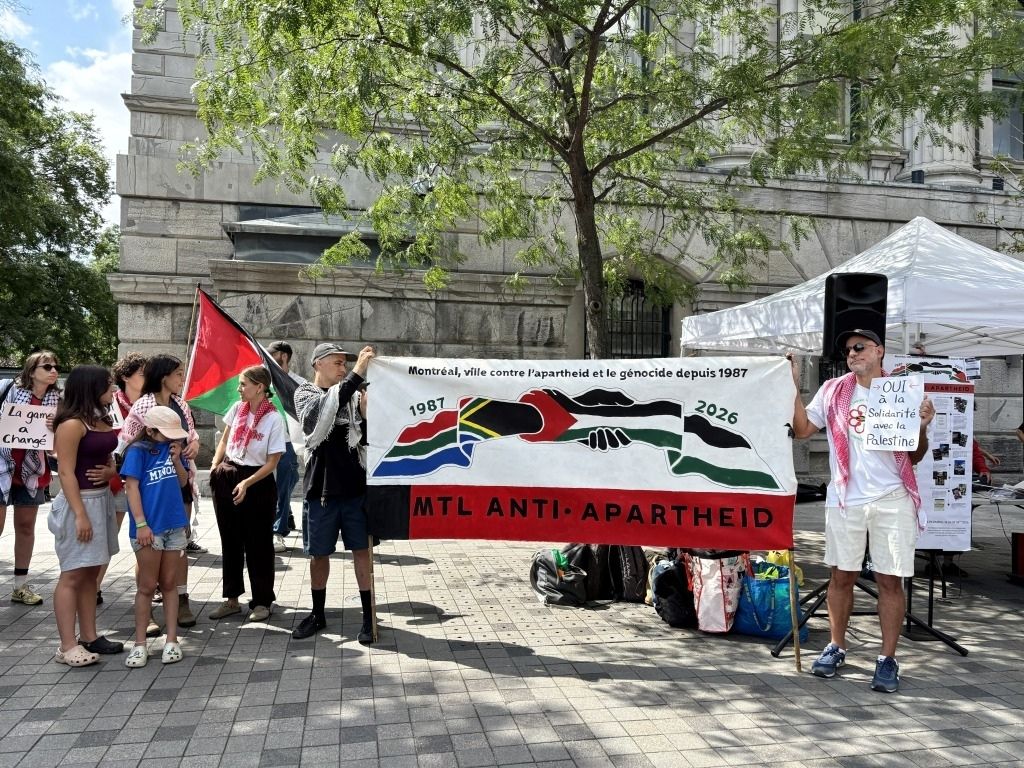
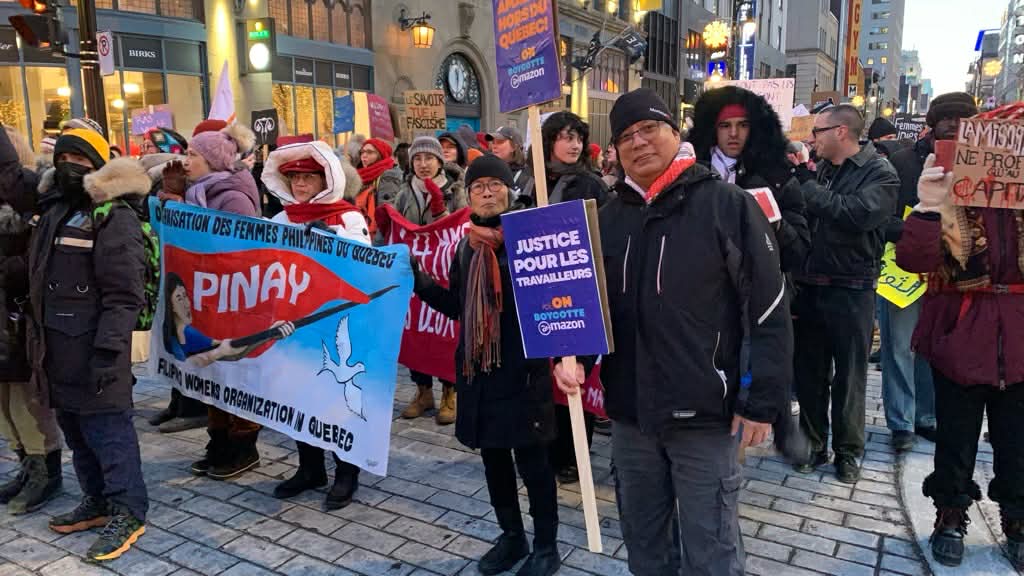
Filipinx-Canadian advocacy groups, including Migrante and PINAY Quebec have joined unions and community organizations for International Worker’s Day on May 1st and held demonstrations marking the International Day for the Elimination of Racial Discrimination in March. Protesters denounced anti-migrant policies, and spoke out against systemic racism, scapegoating, and labour exploitation.
“The international narrative of ‘Filipino resilience’ is often romanticized in ways that gloss over deeper issues. Yes, we are strong and resourceful, but we shouldn’t have to be resilient because systems continue to fail us. Sometimes that narrative becomes a way to avoid discussing accountability, inequality, and government neglect,” says France Stohner, founder of Centre Kapwa, in Montreal, a non-profit organization rooted in restorative justice and by decolonizing Filipinx Canadian diaspora mental health and wellness.
Recent protests in the Philippines and across the diaspora highlight growing anger over corruption, imperialism, and migrant exploitation. The “Trillion Peso March,” held multiple times since late 2025, has brought tens of thousands into the streets to demand accountability over alleged billions lost to corrupt flood control projects and to call for political reform.
In recent months, mobilizations have continued, including anti-imperialist marches toward the U.S. Embassy, protests denouncing U.S. intervention and war, and nationwide transport strikes opposing rising fuel prices and economic policies tied to global forces.
Jean Berly’s story and the hidden realities of migrant workers
“Many of us face underrecognition, precarious work conditions, and the ongoing pressure of supporting family back home [...] We often celebrate Filipinos and how strong we are but the real struggles and hardships communities are experiencing do not get told in mainstream media,” says France, shedding light on media narratives that brush past lived realities.
Jean Berly Juan’s story is one of many experiences shared amongst the diaspora in Canada.
As a young single mother and former nursing graduate, Jean Berly made the difficult decision to leave her toddler in the Philippines and work as a caregiver in Israel for ten years to support her family. Two years ago, she arrived in Montreal under Quebec’s Temporary Foreign Worker Program.
Facilitated by recruiters of a Montreal agency, Jean Berly alleges she was placed in coercive employment with her initial employer. She describes unpaid work, no time off, and poor living conditions while caring for her employer’s mother in a nursing home around the clock for ten days. She alleges her recruiter had also falsified documents, filing her income taxes for in 2022 when she had only arrived in Canada in August 2023.
As she settles quietly in her room, Jean Berly recalls her first days working for her employer:
“She wanted me to live in the nursing home, and it was like a hospital. She provided me with a bed, but it still feels like a hospital.”
“In that corner everybody will see you. So it’s not a good environment for me. Even the food she brought me some but I couldn’t eat what I wanted because I could not cook in the nursing home. And the first thing I wanted to do was shower and I couldn’t even do that.”
Since leaving the Philippines, Jean Berly had always hoped to come to Canada and bring her family. While arriving in Canada fulfilled that dream, it came at a personal and financial cost.
Jean Berly was diagnosed with advanced cancer that had spread from her bones to her lungs and now her brain. She was given a prognosis of one month to live. Now nearly 3 years later, she faces the possibility of falling into a coma if her tumour grows.
“The pain reached my back, and I couldn’t get up from bed. That’s when I went to the hospital, and they said the cancer was back. When I was in Israel, I had breast cancer [...] At that time, I was recovering.
But after about two months here, I started wondering why something felt wrong—then I noticed tumors starting to come out,” Jean Berly points towards her collarbone.
It has been over seven years since Jean Berly last saw her daughter, who is now 10 years old.
“I really, really want to go home to my daughter.
“Because after all this suffering and all the things that happened here, she's the one who gave me the strength. So, I’m hoping that when I get there, I'll get better because of my child. I’m not thinking about the six months that I have left, I'm thinking I’ll have more,” she says as she sits up.
Jean Berly is now in the Philippines with her family: “They give me strength, especially now. It’s [been] hard to adjust to being gone for so long,” she says.
Addressing human trafficking and migrant exploitation
Since 2019, Cheney Cortes has worked as an immigration consultant with PINAY, an organization in Montreal dedicated to advocating for the rights of Filipinx migrant and immigrant women in Quebec since 1991. With both their support, Jean Berly was able to secure a new employer and a closed work permit. However, she left her job under an agreement not to pursue legal action and without receiving her full pay from her previous employer.
According to Cheney, Jean Berly invested a sum of $8,000 USD in the migration process, only to encounter exploitation upon arrival. A Radio-Canada investigation that PINAY and Cheney appeared in, documented hundreds of similar cases despite laws prohibiting recruitment fees to low-wage foreign workers.
“Many unscrupulous recruitment agencies have [...] put many foreign workers in debt, we expect to find many overstaying and falling out of status,” says PINAY Quebec Chairperson, Jasmin de la Calzada.
Paying excessive fees to work, and staying quiet about their abuses, under threats of losing their jobs or being deported are situations where many workers become vulnerable, Cheney notes. Many others in similar situations are often given no choice but to return home because of the hurdles to gain a permanent residency. Even applying under a humanitarian application is not a viable option.
“...The problem with humanitarian applications is that it takes 10 years to apply for [...] There's no more chance for her, it's all closed and she has to go home and die there .. literally a suicide,” Cheney continues discouragedly.
Humanitarian and Compassionate (H&C) applications in Canada typically take a couple years to process, though extreme backlogs have caused waiting times to stretch up to 10 years for some applicants according to recent processing times.
Now that Jean Berly’s back in the Philippines, her initial six months prognosis no longer reflects her current situation. There, she will not be able to afford her treatments, Cheney says. In the Philippines, healthcare is privatized.
Fearing the unpredictability of her condition and the financial burden this could place on her family, Jean Berly chose to return home instead of bringing her daughter to Canada which could have extended her life more. After many years apart she is now reunited with her daughter.
The challenges with Quebec’s immigration policies
Not only do migrant workers endure years of family separation, exploitation, and the challenges of adapting to a new country, they also face discrimination and prejudice while facing uncertain immigration policies.
“Migrant workers […] have been the targets of anti-immigrant sentiments that blame them for things like the housing crisis [and] the loss of the French language [...] These racist narratives are used to justify […] restrictive and even violent immigration policies like the impending Bill C-12,” says Jasmin from PINAY.
The Canadian Civil Liberties Association highlights major concerns with Bill C-12, the Strengthening Canada's Immigration System and Borders Act including limits to fair refugee hearings, expanded government discretion over applications, and the ability to revoke documents under vague “public interest” grounds.
During the pandemic, immigration rules were also relaxed, allowing those on tourist visas to apply for work permits and causing a surge in applications. In recent years the government tightened restrictions, leading to tougher requirements and widespread refusals.
Advocates say these shifts have left many migrant workers in precarious situations. When employment ends, workers must quickly secure a new employer to maintain their status–something that has become increasingly difficult due to processing times.
Quebec is experiencing a significant shortage of caregivers, with more job openings than available workers. At the same time, advocates say many qualified migrant workers who could help fill this gap are unable to access these jobs due to restrictions tied to their immigration status.
Filipinos make up a significant share of temporary foreign workers and non-permanent residents, in health care, caregiving, and service sectors. However, as of this year, Canada has begun reducing work permit allocations, a shift that will force many workers to return home.
The Philippine labour export program and the ongoing impact on the diaspora
Today, the Philippines continues to rely on labour exportations, with approximately 7,000 Filipinos leaving the country daily.
For decades, Filipinos have been sold the idea by the United States, that working abroad as nurses would provide financial security for their families while contributing to the economy. In reality, this labour migration helped fill a critical healthcare shortage in the United States and other Western nations. The message was often explicit and reinforced.
“I remember a story about one of my aunties who was in nursing school and about to receive her diploma [...] at the next table over, there was a sign saying ‘nurses needed U.S. and Canada’,” France from Centre Kapwa recalls.
“The Philippines is relying on an economy that sends its people away,” she contends. We see these patterns today with the Temporary Foreign Worker Program in Quebec, which relies on cheap labour to fill a need and leaves workers in precarious situations.
Jasmin from PINAY also emphasizes how Filipino-Canadians send over a billion dollars home each year and argues that it is especially devastating to see hard-earned remittances undermined by corruption and a crumbling infrastructure resulting from repeated natural disasters that could have been prevented.
Jess Agustin, a long time advocate for social justice and migrant rights highlights the deep rooted impact of U.S. influence on the Philippines:
“In 1945 after the war, the United States gave us so-called Independence [...] the Americans had the right to exploit the country and also to have its permanent military bases.The reason why Marcos stayed in power [was] because of the U.S’ support [...] and he introduced this labor export program.”
The dictatorship of Ferdinand Marcos Sr. in the Philippines from 1965-1986, backed by the United States during the Cold War, fundamentally restructured the Philippine economy through [...] enriching Marcos’ friends and allies, leading to massive debt, widespread poverty, and systemic corruption with lasting impacts on the country’s development.
The Philippines’ current president is Ferdinand Romualdez Marcos Jr.
How communities show up in Montreal and what the diaspora wants
In November last year, a typhoon-relief fundraiser was held at Buboy in Chinatown after back-to-back disasters swept the Philippines. Surrounded by music, Filipino comfort food and drinks, co-founder Shari Ramos of Filipinos of Montreal reflects:
“The first week when it happened no one had water or electricity [...] The people we are helping out today are actually friends of my cousins [...] It’s been very tough to deal with and I’m happy that communities here in Montreal are coming together”.
The crises in the Philippines are not isolated. Across borders, Filipinx communities are demanding accountability for the systems driving displacement, exploitation, and inequality.
In Quebec, this translates into calls for stronger protections against recruitment abuse, enforcement of laws banning illegal fees, and real accountability for exploitative agencies. Advocates are also demanding accessible pathways to permanent residency, fair immigration processes, and an end to policies that leave migrant workers vulnerable.
“Filipinos in Quebec and Canada are resilient in their resistance to corruption in the Philippines and their adopted homes [...] They are not taking it sitting down but are expressing their anger and outrage on the streets,” says Jasmin from PINAY.
“The fuel that generates our activism is about hope,” says Jess Agustin. “Hope for a country that we love, still [...] You see the desperation on our part for a change and then you look and you see young people mobilizing [...] making the connection: the impact of US imperialism, colonialism [...] You have a culture that is quite damaged but you also see young people bringing the indigenous culture [back] and building a vision of a society [where] they don’t have to leave the country.”
.jpeg)