
As the Quebec election approaches, La Converse has turned the microphone over to organizations that work primarily with immigrant, racialized, and disadvantaged communities in Montreal. Housing, food security, immigration, public services, and funding—they all told us what they expect from the next government and shared the commitments they want to hold them to after the vote.
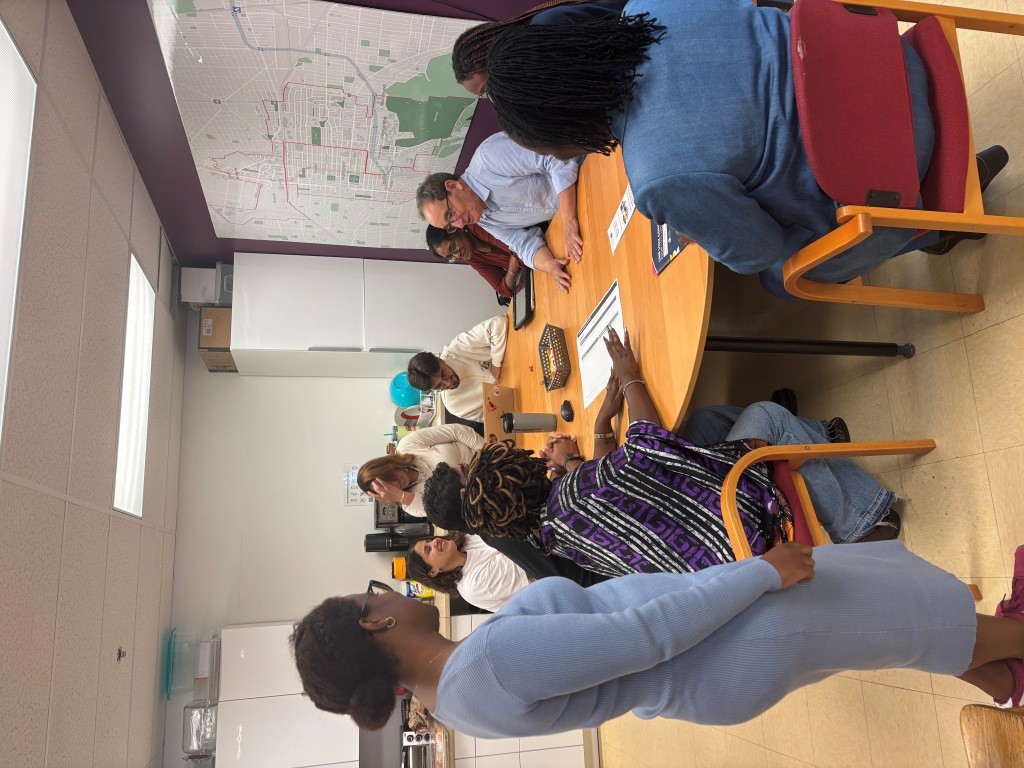
There are a few pieces of cheesecake left on the meeting table. A few minutes earlier, the team at the Côte-des-Neiges Community Development Corporation (CDC) was celebrating a colleague's birthday. In the large room (which, in the end, isn't all that large), the chairs are still arranged around the table. The atmosphere is a far cry from what we usually associate with an election campaign: no slogans here, no partisan debate. Just a team that took a break to share a moment of camaraderie before getting back to work.
The CDC brings together about fifty organizations in Côte-des-Neiges and coordinates several roundtables focused on families, youth, social housing, and public health. Its 11-person team acts as a vital link between many stakeholders in the neighborhood.
With the October 5 Quebec election just weeks away, they have a much more serious message for future elected officials: "Inaction has a cost," summarizes Alimatou Touré, the CDC's coordinator.
"Come spend a week in our shoes"
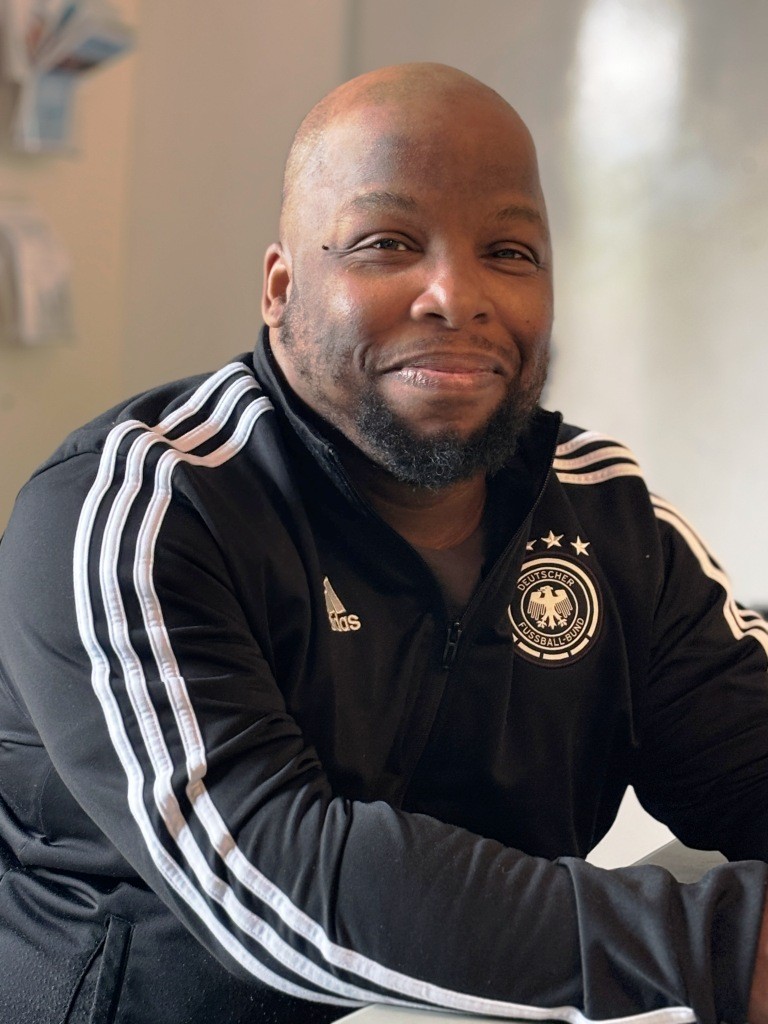
In Ahuntsic, Kenny Thomas runs Entre-Maisons Ahuntsic, an organization that works in three social housing complexes with families and youth in the Saint-Sulpice area. When asked what he wants to say to the next premier, he doesn't start by asking for a budget increase; he invites them to come see the reality on the ground. Not for a few hours, he adds, but for a week. A week in the shoes of the support workers or the residents of public housing. "These issues aren't just issues during an election campaign. Unfortunately, they are part of the daily life of many people living in public housing," he explains.
For Kenny Thomas, the difference lies in the time taken to truly understand things. Candidates regularly meet with people in precarious situations, but policy responses are often prepared based on timelines much shorter than those in which these communities operate. "Their way of life and their reality cannot be measured in terms of an election cycle," he says.
Last year, Entre-Maisons lost more than half its team due to a lack of renewed funding: two youth workers, one family worker, a project manager, and an administrative assistant all left the organization. He estimates he needs six staff members to rebuild the team required for the organization to function properly. The problem, he explains, is largely tied to the logic of project-based funding.
Homework help, for example, is not a need that disappears when a grant ends. Children will always need help, parents will always need support, and organizations will always need to maintain their connection with schools. "To me, ensuring academic success for young people is a basic need. Feeding people after school is a basic need," explains Mr. Thomas.
His request to the next government is therefore clear: increase and stabilize core funding, rather than forcing organizations to constantly reinvent their projects just to keep their teams together.
Gaps that organizations cannot always fill
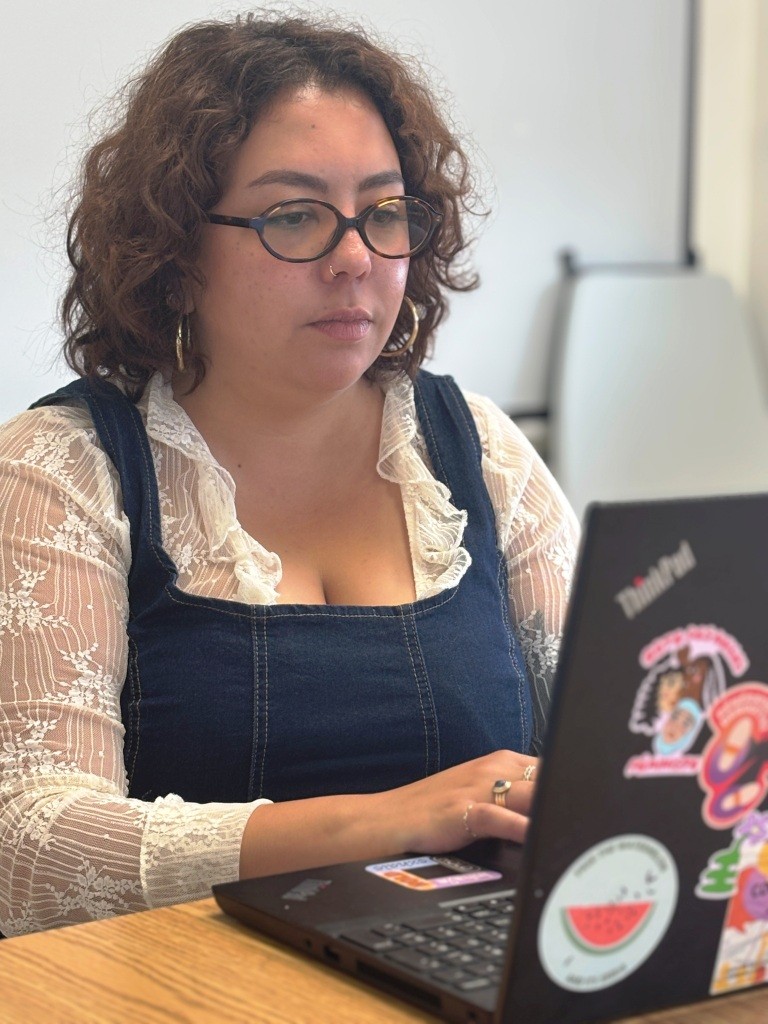
Back in Côte-des-Neiges, where Amira Bensahli observes the same phenomenon, but within the journeys of women, particularly immigrant and racialized women.
The organization Femmes du monde in Côte-des-Neiges, where she serves as general coordinator, has existed for nearly 30 years. It provides services such as active listening, psychosocial support, and assistance for situations involving domestic violence, hidden homelessness, and when migration-related challenges are compounded by other forms of precariousness.
For her, one of the main problems is the proliferation of criteria determining access to public programs. A woman may not meet the criteria for one program due to her immigration status, and then be excluded from another because she is employed, or because her situation does not exactly match what the program covers. "We end up with members who, most of the time, don't fit the criteria for one program or another. And who receive no services at all."
The organization then becomes the place where they try to fill these gaps. But with much more limited resources than the state.
The difficulty is particularly visible in housing. A newly arrived woman does not necessarily benefit from the same conditions as someone who has been in the country for several years. Furthermore, when a woman experiencing violence must leave her home, her immigration status can also complicate her access to certain shelter or housing solutions.
Ms.Ms. Bensahli describes a less visible form of homelessness: women who move from one couch to another, stay with relatives, or rely on an informal network to avoid ending up on the street. For her, the problem is not just about creating more programs. We must also look at how the different systems fit together—or fail to fit together. "We can't just be expected to fix everything ourselves," she says.
In her view, organizations cannot become the permanent solution to the weaknesses and flaws of public programs.
From housing to immigration: priorities that go beyond funding
In Parc-Extension, Faiz Abhuani, general director and founder of Brique par brique, places housing at the center of his demands. But not just any housing. He is calling for public funds earmarked for affordable housing to be directed primarily toward projects led by non-profits and cooperatives, so that the housing remains affordable in the long term.
He speaks of "decommodifying" housing, which means increasing the share of buildings held collectively by non-profit organizations, cooperatives, or other forms of collective ownership. "Decommodifying means taking real estate out of the financial system," he summarizes.
This approach also stems from his experience with affordable housing programs. According to him, these programs favor large-scale projects at the expense of initiatives from community groups and residents. Yet, these small projects can have an importance that goes beyond simply housing people. "Community groups in general see housing as a lever for social change and for improving communities," he says.
His other concern directly affects the immigrant communities of Parc-Extension. He is calling, in particular, for the facilitation of family reunification and the immigration process, as well as for greater investment in public services, the community sector, and education.
A white paper written by many hands
All of this is particularly visible in Côte-des-Neiges. Representatives from the CDC participated in a consultation process there that led to a white paper intended for future elected officials. Social housing plays a significant role in it. The CDC estimates that several thousand families are waiting for social housing in Côte-des-Neiges and is calling, in particular, for at least 4,800 of the 10,000 housing units planned for the former hippodrome site to be social or community-based. It also hopes that the government will support the acquisition of existing buildings to remove them from the speculative market.
Food security is another priority. Organizations are seeing an increase in demand and are calling for food to be recognized as a right. "It is not normal for people to have to choose between housing and food," explains Alimatou Touré, Executive Director of the CDC.
For Aya Laurie Kouadio, coordinator of the Youth Table and the Diversity and Inclusion Committee, this initiative must also help change how the neighborhood is perceived. Members have formulated several priorities, including education, secularism, immigration, and integration. For her, it is essential to look at the people behind these issues. "We want to invest," she emphasizes, "in the people who live in Côte-des-Neiges: women, men, non-binary people, newcomers, young people, and the elderly."
She also refuses to have Côte-des-Neiges defined solely by its problems with violence or vulnerability.
Secularism and immigration are also among the identified priorities. CDC representatives believe that policies regarding religious symbols have particularly concrete effects in the neighborhood. They are calling for a reflection on restrictions related to religious symbols, as well as an approach to immigration that views newcomers as an asset rather than a source of problems.
"Respect for fundamental rights is non-negotiable for us. We want the next government to clearly commit to working with these neighborhoods that have struggled significantly over the last eight years under the current government. We want things to change now," insists Mohammad Affaq Mansoor, one of the CDC organizers.
"We want to be partners"
The role of the community sector in the Quebec model is one of the themes that the Côte-des-Neiges CDC shares with the "Le communautaire à boutte" movement, which once again mobilized the sector on September 15 in Trois-Rivières. On that day, nearly 5,000 people from the community sector participated in a national march as the election approached. The movement is calling for increased funding and specific commitments from the parties.
Organizations are asking for more core funding, better working conditions, greater stability, and respect for their autonomy. Project-based funding, they say, causes turnover, weakens teams, and forces organizations to adapt their mission to the criteria of funders.
Mr. Mansoor summarizes the problem this way: the community sector does not want to become a discount solution for the state. "We want to be partners in strengthening the social safety net instead," he insists. This distinction is important. For Alimatou Touré, the government should first measure what would happen if organizations closed their doors, even for just one day.
Accountability
So, how will we know if, in four years, the next government has truly addressed these demands? At the CDC, the proposed indicators are concrete: more people properly housed, better food security, less exhausted organizations, and more stable teams. "Inaction has a cost," repeats Ms.Ms. Touré.
Kenny Thomas reaches a similar conclusion from his social housing complex in Ahuntsic. For him, public decisions have a domino effect: losing a homework help service can affect a young person's academic success; reducing local services can increase a family's isolation; reducing an organization's operating hours can prevent a working person from receiving support.
The next government, they say, will not be able to measure success solely by what it has spent. It will need to look at what those investments have changed in the lives of the people concerned.
In Côte-des-Neiges, CDC representatives have already planned a way to track the commitments made during the campaign: asking candidates to put them in writing, and then following up with them during their term. An election night event is expected to allow residents to ask them questions directly.
Their message to the next government ultimately boils down to a simple request: that the commitments made during the campaign are reflected in the decisions made after the election.