
Between immigrant parents and the Youth Protection Directorate (DPJ), the gap of mistrust remains difficult to bridge. Even though the institution is sometimes cited as a model abroad, it still too often causes anxiety on the ground.
In Saint-Michel, parents requested to meet directly with representatives of the institution to ask their questions, challenge certain beliefs, and better understand a system that continues to evoke mistrust.
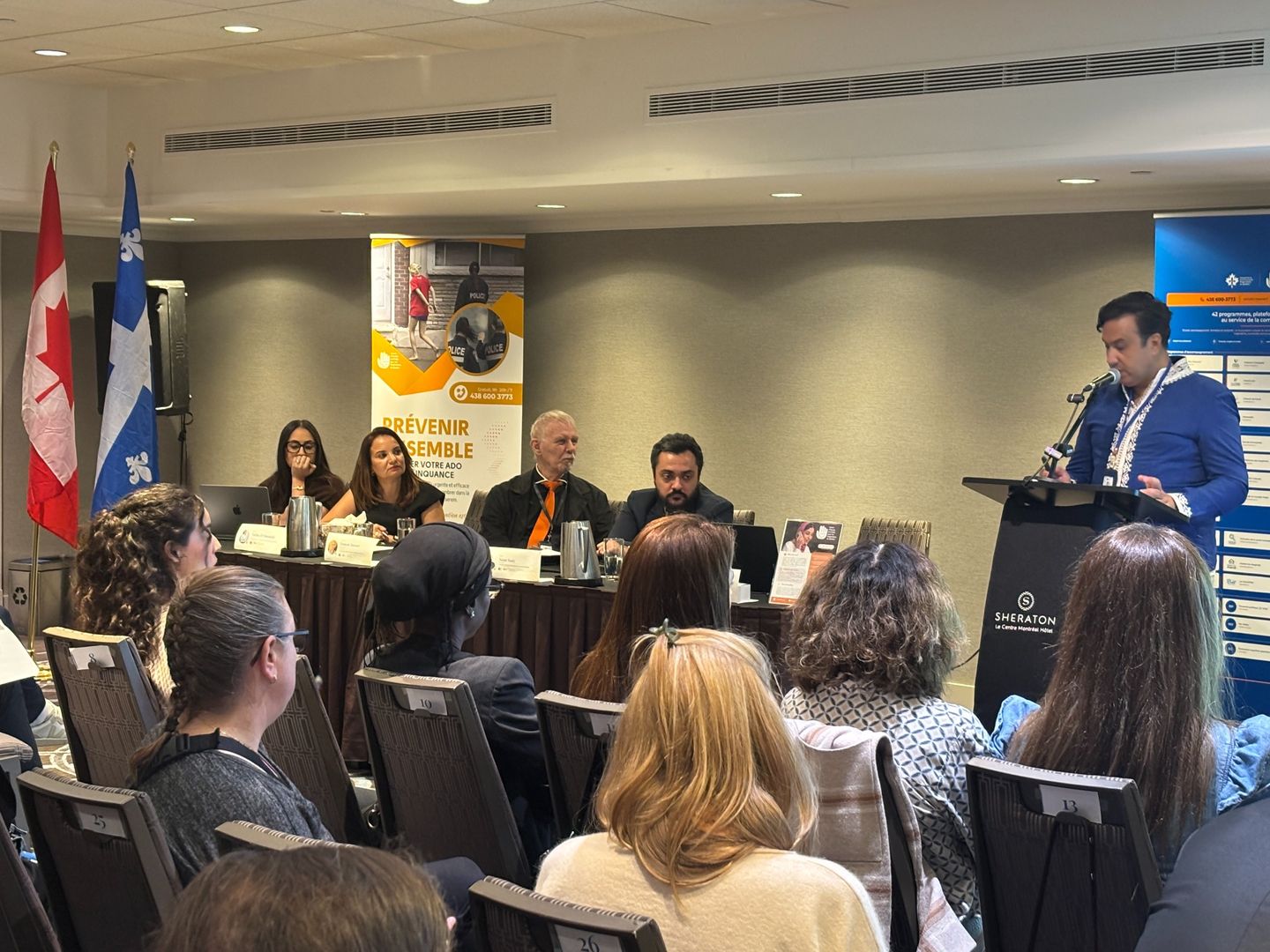
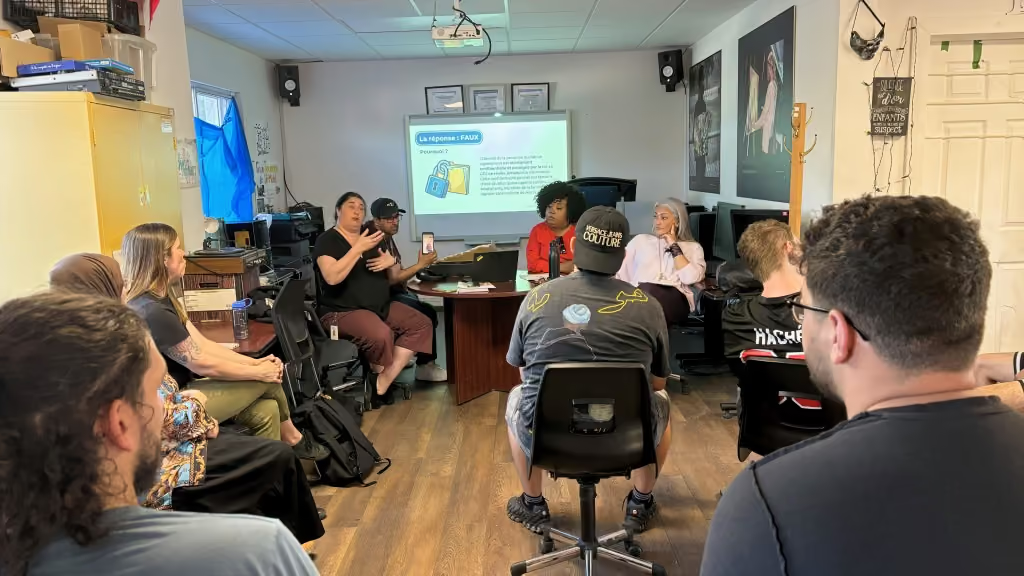
The early June heat didn't deter citizens from attending the meeting. At the Saint-Michel Youth Forum, seats gradually filled up. Throughout the evening, few left before the end. For nearly two hours, parents, young people, and community workers listened, questioned, and debated with representatives from the Youth Protection Directorate (DPJ).
The interest in the meeting highlights the importance of the topic. While the DPJ is often presented as one of the pillars of Quebec's child protection system, its name continues to evoke fear among some families regarding child placement, state intervention in family life, or the potential consequences for their immigration journey.
For many parents gathered at the Saint-Michel Youth Forum, one question remains: how can the DPJ not be seen as an institution to be wary of?
That evening, to break the ice and demystify its role, the DPJ team – composed of Wendy Deluy, Kim Roiseux, and Hélène Savard – opted for an interactive quiz. Placements, immigration criteria, cultural differences: no subject was off-limits.
A Meeting at the Parents' Request
The idea for this meeting didn't originate with the DPJ; it came from the parents themselves. "Many parents asked me at the beginning of the year, 'Can we have a meeting with the DPJ?'" recounts Mohamed Mimoun, coordinator of the Saint-Michel Youth Forum and the meeting's initiator.
Some were already in situations involving youth protection, while others simply sought to understand. "There were many situations related to their children, especially teenagers aged 14 to 16," he continues. "They had heard many things about DPJ intervention – that children are taken, that they are placed in youth centres, and so on." Through discussions with families, he observed that many even hesitated to seek help from other services.
It must be said that the prevailing anxiety had been rekindled a few days earlier. A video, which went viral on social media, showed a DYP intervention, accompanied by police, with a Quebec family. Filmed by the children's mother, the scene depicted crying, shouting, and the distress of a family facing a placement decision.
Not knowing the details of the case, the three DYP representatives declined to comment on the intervention itself, which was naturally brought up during the discussion. However, they acknowledged the profoundly painful nature of such situations, both for families and for the workers called upon to implement decisions made in the best interest of the children.
For many attendees, these images fuel a negative perception of the institution. For Mr. Mimoun, the best way to address this remains allowing citizens to ask their questions directly.
Paradoxically, few parents attended the meeting. Only two mothers participated in the discussions, alongside several young people and community workers.
Mohamed Mimoun said he regretted this. According to him, choosing a weekday evening may have limited the participation of many parents, who are often busy with work or family responsibilities.
Those who were present, however, did speak up. One of them specifically questioned the anonymity of individuals who report concerns to the DYP. Citing situations of "revenge" and "miscommunication," she argued that families should be able to know the identity of the person who made the report.
The DYP representatives reiterated that the confidentiality of reports is mandated by law. "We'd rather have a few false reports than not report children who are truly in need," replied Kim Roiseux, while acknowledging that malicious reports can sometimes occur.
An institution under scrutiny
While many participants came seeking answers from the DYP, it's also because the institution carries a heavy legacy of controversies and criticisms.
In Quebec, youth protection underwent significant re-evaluation following the tragedy of the Granby girl, in 2019. The work of the Special Commission on the Rights of the Child and Youth Protection, chaired by former judge Régine Laurent, brought to light systemic failures affecting information flow, access to services, and the network's capacity to meet the needs of vulnerable children.
In several Indigenous communities, the DYP has also been criticized for an approach deemed too far removed from the cultural realities of families. Nations like the Innu and Atikamekw have called for greater autonomy in child protection, believing that solutions designed by the communities themselves often better preserve family and cultural ties.
In Black communities, several studies have also documented an overrepresentation of children in reports, investigations, and placements. Alicia Boatswain-Kyte, an assistant professor at McGill University's School of Social Work, showed in a 2020 study, and then in a collaborative work published at the end of 2025, that a Black child is at a much higher risk of being investigated or placed than a white child.
Are immigrant families targeted?
In Saint-Michel, parents' questions therefore extend far beyond personal matters: a real societal debate has entered the room, particularly regarding how the system intervenes with families.
One of the most important discussions of the evening revolved around the following question: "Does the DPJ often intervene with immigrant families simply because they are immigrants or because they have less money?"
For social worker Kim Roiseux, the answer is no. "Cultural origin, immigration status, or financial situation are not grounds for intervention," she states. However, the discussion doesn't stop there. The intervener acknowledges that immigrant families are more frequently involved in youth protection cases. "Immigrant families are still overrepresented at the DPJ for many reasons," she explains.
The social worker also mentions the challenges faced by newly arrived families: adapting to a new society, isolation, lack of awareness of services, or crisis situations related to settling in a new country. That said, placement remains a last resort, it is specified, and in the vast majority of situations, the DPJ works with the family to ensure children remain safely at home. "Often, we arrive, we explain things, we find the necessary resources, and ultimately, the DPJ doesn't remain involved," adds Ms. Roiseux.
From Cultural Difference to Misunderstanding
To illustrate the situations she faces, Wendy Deluy recounts the story of an immigrant mother reported to the DPJ for neglect. The school was concerned because the child, unlike their classmates, did not have a meal at lunchtime. "They said it was gross negligence," she recalls. Upon meeting the family, the intervener dispatched by the DPJ discovered a completely different reality.
In the mother's country of origin, eating habits are different. The child thus received a very hearty meal in the morning which, according to the family, covered their needs for a large part of the day. "When she described everything the child ate in the morning, I thought: 'My goodness, that's a whole day's meal!'" comments Ms. Deluy.
The intervention then took a different direction, she continues: "We had to explain to the mother how things worked here and also explain to the school the reality of this family."
For Wendy Deluy, this example shows that a report does not always correspond to a situation of abuse. "It wasn't a negligent mother. It was a lack of understanding of each other's culture," summarizes Wendy Deluy, prompting approving nods in the room, where several parents precisely fear that their cultural practices might be misinterpreted.
The Weight of Words
Another key moment concerns the expression "parental skills." For Mohamed Mimoun, this can have negative connotations for some immigrant families. "Parental skills is an expression that doesn't resonate well with many immigrant families," he states. "For them, being a parent is something fundamental. When we talk to them about parental skills, they might feel that their ability to be a father or mother is being questioned."
Several participants speak in turn. One suggests talking instead about parenting strategies or tools. Another compares the situation to a doctor who would only use scientific jargon with their patients. The DPJ representatives welcome the comment with interest. "These meetings are very valuable for us," acknowledges Hélène Savard, head of service at the DPJ. "Learning that the term 'parental competencies' can offend some people also allows us to adjust."
During the discussion, a participant also asked if the DPJ has adapted its practices to the evolution of Quebec society and its increasing diversity.
The institution's representatives state that several changes have been made over the years, both in intervention approaches and team composition. "When I joined the DPJ 26 years ago, I was the only Black woman," recounts Wendy Deluy. Today, she says, caseworkers come from much more diverse backgrounds. "This brings a different perspective to interventions." The caseworker also points out that certain cultural and religious realities are given more consideration than before, especially when a child is placed. According to her, however, the institution still has work to do to better adapt to the diversity of families it supports.
Fear of Immigration Consequences
Among the quiz questions, the one about immigration comes up repeatedly. For many families, the concern is real. Can a DPJ intervention jeopardize a permanent residency application? Can it affect the immigration status of parents or children?
"It's often something we hear when we visit families. People are afraid that we'll communicate with immigration or that it will leave a mark on their record," notes Kim Roiseux. And she immediately emphasizes that the DPJ does not communicate with immigration services as part of its usual interventions.
Her colleague Wendy Deluy, however, adds an important nuance. She reminds that situations falling under the Youth Criminal Justice Act (YCJA), which concerns young people who have committed certain criminal offenses, fall under a different framework than that of youth protection.
"In the case of young people [who fall under the YCJA], it can, and I emphasize 'can,' have an impact on the [immigration] application. That doesn't mean it necessarily has consequences, but the family absolutely must check with a specialized immigration lawyer," she explains.
For the families present, this distinction seems important. Several are discovering that some information circulating among their acquaintances does not necessarily correspond to the reality of youth protection interventions.
Dialogue to Reduce Mistrust
Beyond providing answers to participants' questions, the meeting also aimed to create a space for exchange between the institution and citizens. "Reaching out to others is incredibly important," states Hélène Savard, head of service at the DPJ. According to her, these meetings allow parents to ask questions they might not necessarily dare to ask their own caseworker.
The approach is also useful for the institution itself. "If people don't provide us with feedback, we might stick to practices that aren't the best," she acknowledges.
Of course, a single evening won't erase decades of mistrust. But for Mohamed Mimoun, this direct dialogue is a crucial first step. To offer an alternative, Michèle Laramée, a representative from the Saint-Michel CLSC, is also on site to present frontline support services, which are precisely designed to prevent situations from escalating to a report.
In a neighborhood where navigating the Quebec system remains a daily challenge, the solution lies in dialogue. "Why not go directly to the source for answers?" concludes Mohamed Mimoun. That evening, the parents of Saint-Michel courageously chose to ask the questions that cause fear.