

Adopted on October 30, 2025, Bill 94 raised fears of hundreds of dismissals in the school system, in the Montreal region alone. Given the uncertainties surrounding acquired rights, school service centers requested clarifications from the Ministry of Education. A memo sent on March 18 by Deputy Minister Carole Arav clarified its application – and allowed for staff to be "recalled."
However, educators wearing the hijab, either recalled or dismissed this April, describe an uneven and unpredictable implementation of Bill 94, marked by contradictory decisions – all of which fuels misunderstanding, fear, and a loss of trust in the system.
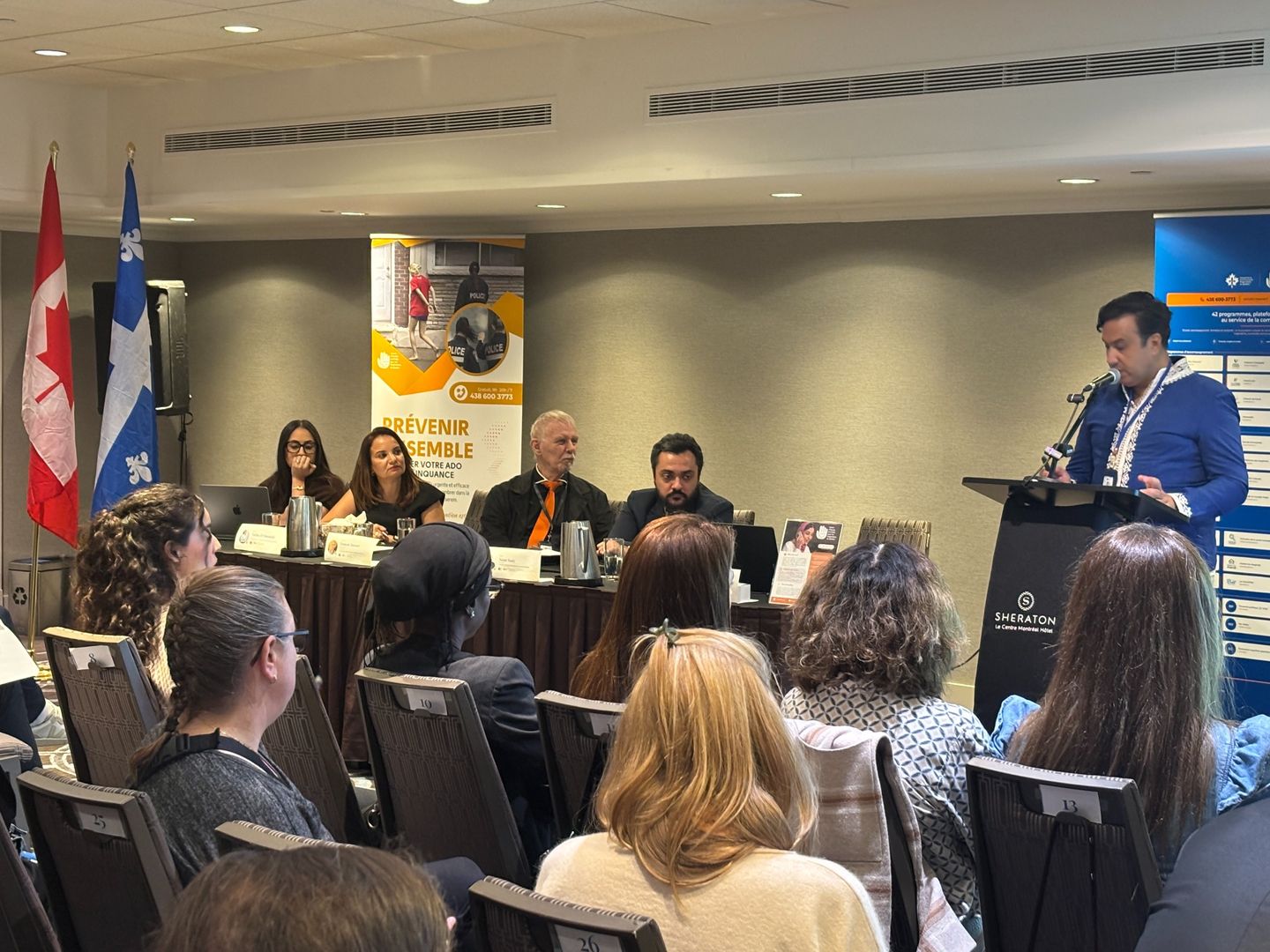
In the entrance hall of a school on Gouin Street in Pierrefonds, a first group of women exchange hushed words while waiting for others to arrive and for the meeting to begin. They don't all know each other, but all are affected by the recent application of Bill 94 in their workplaces.
Some were called back to their positions after initially being dismissed. Others received the opposite instruction: remove their hijab or leave their job. Between these two situations, there is no apparent consistency. In the snippets of information they exchange, they confirm what each already knew: from one school service center (CSS) to another, and sometimes from one institution to another, the very logic of decisions differs.
The testimonies converge on one observation: the law, in its application, does not create a uniform framework, which opens up room for interpretation. "This ambiguity has led to almost every institution and school service center having its own interpretation of the law's application, which has increased the demands," explains Samer Majzoub, president of the Canadian Muslim Forum (CMF), who organized the meeting.
Tonight, about thirty women wearing the Muslim veil, employees of Montreal and Laval School Service Centers, are participating in this CMF initiative, which "aims to support those affected by the evolving legislative situation in Quebec, by offering them a space for communication and the opportunity to obtain personalized legal and social advice."
"They played with words"
The discussions among the participants reveal their common difficulty in grasping the rules that apply to their situations. Criteria evolve, decisions change, and answers vary depending on who is asked. Misunderstanding and fear – their faces express the same anxieties. And there is also anger. "There are no clear instructions. The result is that the situation has become vague and arbitrary, with everyone acting according to their own intentions," Samer Majzoub continues.
The meeting lasts late into the night, with a lawyer present. One educator reports that her status was redefined several times within a few hours on several occasions. Initially deemed not subject to the law, she was then asked to provide explanations, before ultimately being denied the possibility of benefiting from acquired rights. Others recount the opposite: an initial refusal, followed by a recall to work.
At the heart of these changes is the notion of "acquired rights," whose interpretation varies. L.C.*, an educator in Laval, says she was recalled after a "new analysis" of her case. "They said: 'We have broadened the understanding of the word «function»' […] They created categories and sent us tables. They sort of played with words," she explains.
The "recalled" educators are those who, among other things, changed positions within the same category. Those who changed categories or employers cannot benefit from what is commonly known as the "grandfather clause," i.e., the acquired rights clause.
Returns… but fear persists
The figures for this operation are partial for now. At the CSSDM, there are already 150 educators laid off. At the Laval School Service Center, about forty support staff employees (educators, specialized education technicians, supervisors) found themselves on authorized unpaid leave after the measures came into effect. Meanwhile, the CSSL indicated in an email to our editorial team that approximately 45 employees who wore a religious symbol agreed to remove it to keep their jobs.
According to the same source, the review of the application of acquired rights, which began in March, allowed 164 employees to return to their positions as of April 13, with 2 others expected to do so in the following days. Other cases are still under review.
For the educators gathered in Pierrefonds, the decisions are not perceived as final, but as subject to revision at any time. This uncertainty fuels constant fear. "I don't trust it," says L.C. "I'm going back, but I don't trust it."
Two cases, the same inconsistency
Farida H., an educator in Laval, is among those who could not benefit from the acquired rights clause. She reports that her management contacted her to present her with an immediate choice: "“What is your decision? Will you come back Monday without the religious symbol or not?” I said: “No, I will not remove my headscarf.”"
Since then, no written confirmation. This lack of clear status prevents her from taking legal action. "Without official dismissal, I can't do much […] even contact the union to file a grievance."
Her case highlights another area of misunderstanding: that of employees who cannot invoke the acquired rights clause due to their hiring date, despite having already started their careers in the network. Trained in early childhood education techniques, Mme Hocine worked in Montreal before being recruited by the Laval CSS after a move. This change of employer shifted her into the "new recruits" category, without acquired rights. "I took legal action […] I changed employers because I was forced to […] but they didn't accept it." She summarizes: "We don't understand what's happening […] it's a double standard."
In Montreal, Hajar Bouras describes a different, but equally opaque, situation. After eight years in daycare, she was hired in September 2025 by the Montreal School Service Center. She states that on the day of her job interview, she explicitly asked about wearing the veil. "I said: “I am a veiled woman. Is that okay or not?” […] They replied: “No, no, there's no problem.”"
A few months later, after the measures came into effect, she was summoned by her management and asked to sign a consent form to remove her religious symbol. She refused. "They gave me five days to think about it […] After that, I received no response." Since then, her file is still active, but no formal decision has been made. "There's no file closure, nothing."
As in Farida H.'s case, this lack of status blocks any action for Hajar Bouras. But for her, there's also a prior breach: a verbal commitment made at the time of hiring that was not honored.
Beyond the administrative situation, she describes an immediate shock. "The first day, it was a shock for me. I cried, I couldn't even stop." And concrete consequences: loss of income, unemployment insurance claim still being processed.
This situation also spills over into the family sphere. Her daughter, also veiled, questions her future in Quebec. "She told me: “But what are we doing here? […] We're going to change provinces, we're going to leave the country!”"
Teachers from the CSSMB also in limbo
Teachers from the Marguerite-Bourgeoys School Service Center (CSSMB) were also present at this meeting. However, they are not targeted by Bill 94. Their presence is explained by a very recent situation: they say they received a letter accompanied by a form to fill out, introducing ambiguity about their status.
This document states that "teaching staff remain subject to the Act respecting the laicity of the State since its adoption in 2019; concerned individuals must also complete the form if they wish to have an acquired right recognized." Further on, the letter specifies: "Only individuals who have received a favorable decision from the Human Resources Department will be considered as benefiting from an acquired right."
This wording, applied indiscriminately to all staff, sowed doubt among some teachers who wear the hijab. While their legal status falls under a different framework, being asked to have an "acquired right" recognized in this context is perceived as a contradictory signal.
Contacted by La Converse, the CSSMB confirmed by email that this letter was indeed sent on April 2 and aimed, among other things, to obtain an accurate picture of the situation, by institution. "This notably includes staff members who already benefit from acquired rights, as these must be validated and documented, according to the new provisions," it is explained.
An individualized analysis is necessary, it is specified, because, in some cases, the employee may hold several positions (teaching and supervision, or other duties). That said, the CSSMB attempts to be reassuring by stating that "receiving the form does not mean that a person's acquired rights are being challenged, but rather that administrative validation is required in the context of the evolving legal framework."
Anger and disappointment with the system
The application of Bill 94 in its first version had caused a wave of panic among parents whose children are in daycare. A Léger poll commissioned by the Association des garderies privées du Québec (AGPQ) and recently made public reveals that two-thirds of Quebec parents are comfortable or find it acceptable for an educator to wear a religious symbol in daycare.
Did the government get it wrong this time? In any case, this accumulation of experiences fuels a broader disappointment. The system, initially perceived as protective, now appears unstable. "We've been put in a situation of uncertainty," says L.C. "I've lost trust."
And the uncertainty is not limited to the present. It affects medium-term projections. Changing positions, accepting a promotion, pursuing training: each decision becomes risky, as it can lead to the loss of acquired rights.
Some hesitate to continue their professional advancement. Others are considering a complete career change. "We'll do what we can, not what we want," says L.C. For some, the reflection goes further. The idea of leaving Quebec emerges, mentioned in connection with relatives who have already left or are in the process of leaving. Families find themselves separated, and individual paths are redefined under duress.
*Name changed to preserve anonymity.
What to do if you are affected?
Given the inconsistent application of Bill 94, several remedies and resources are available to employees, whether or not you have acquired rights.
1/ Check your status and document your situation
Keep all communications with your employer (emails, letters, screenshots, etc.)
Request written confirmation of your status: continued employment, suspension, or dismissal.
Without official documentation, certain procedures (grievance, appeal) may be hindered.
2/ Contact your union
Your union remains the primary contact for challenging a decision.
It can file a grievance, assist with procedures, and clarify the interpretation of collective agreements.
3/ Consult legal resources
Organizations offer information or low-cost or free consultations:
- Commission des normes, de l’équité, de la santé et de la sécurité du travail : employment rights, remedies in case of dismissal or unfair treatment
- Commission des droits de la personne et des droits de la jeunesse : discrimination, violation of fundamental rights
- Community legal clinics (often accessible free of charge, depending on the neighborhood)
4/ Obtain community support
Organizations can offer support, information, and guidance:
- Muslim Forum of Canada.
- National Council of Canadian Muslims
- Local organizations assisting workers or immigrants