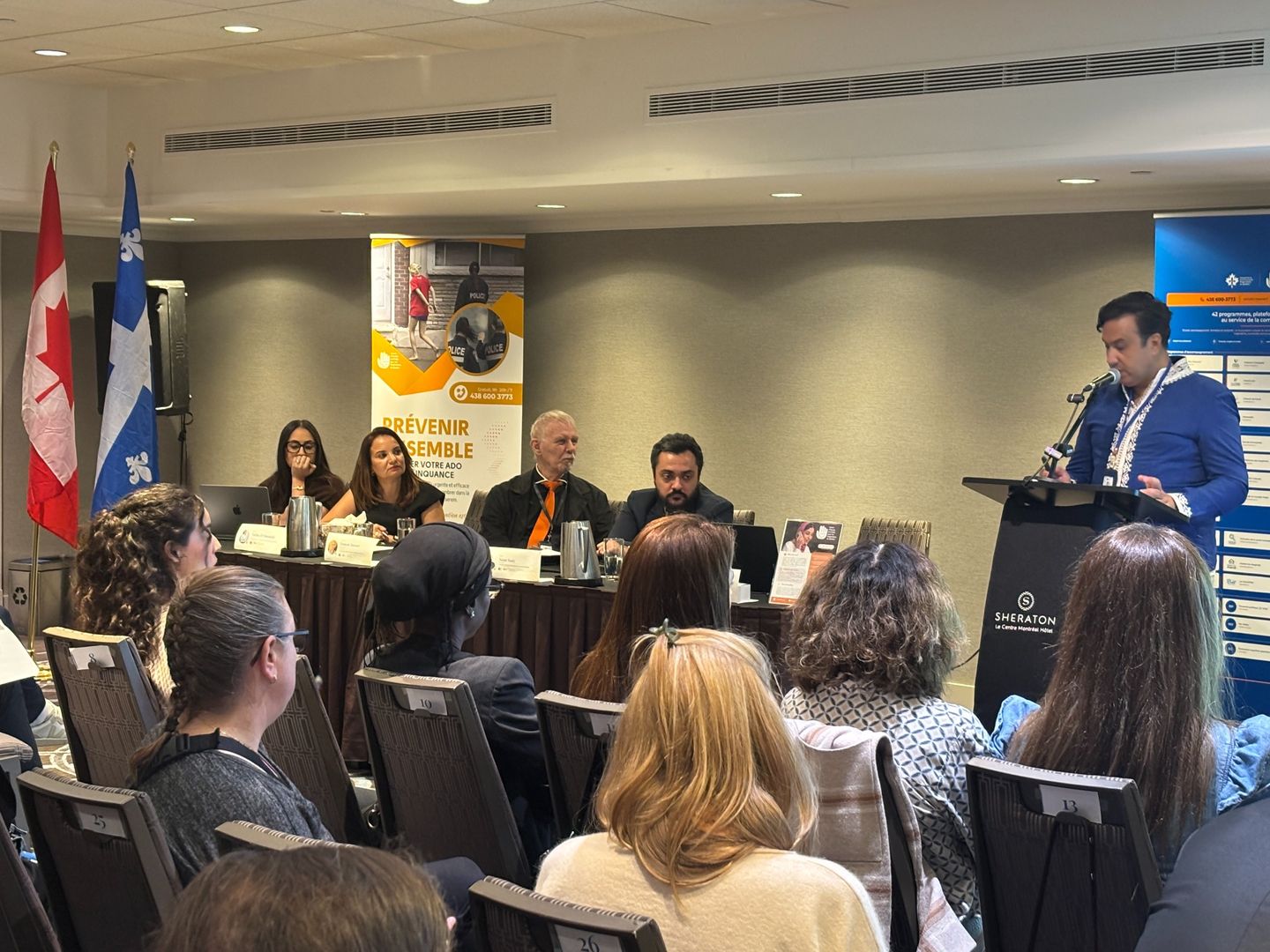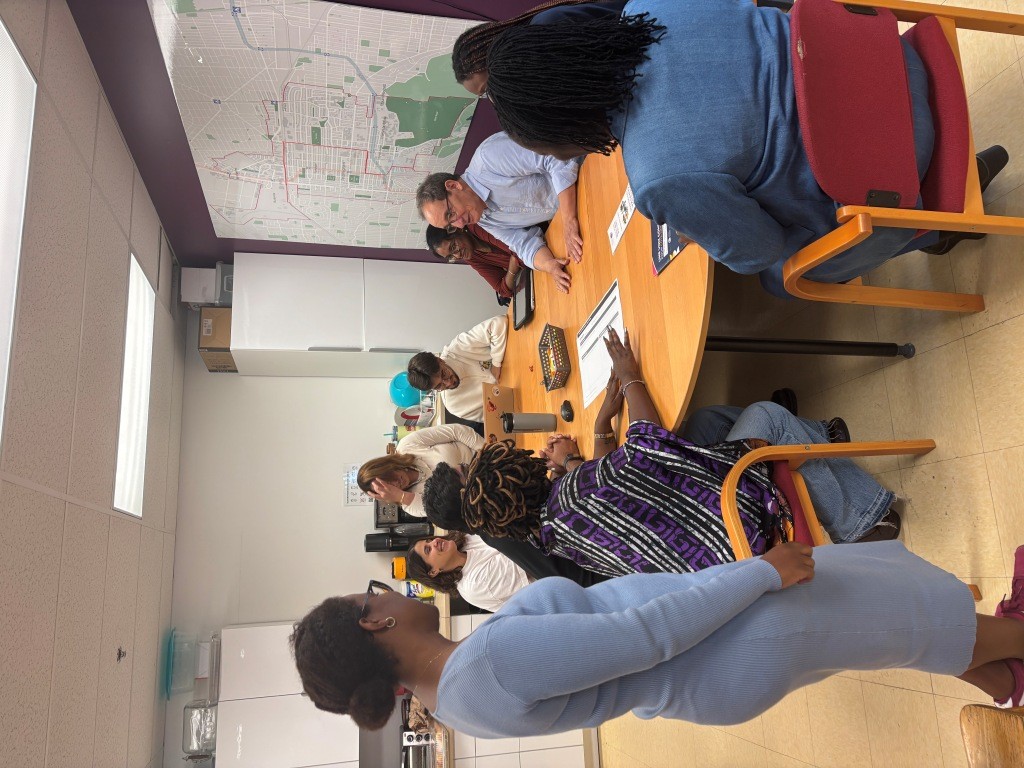


Gathered around community workers and a family bereaved by armed violence, parents from Rivière-des-Prairies spoke frankly about juvenile delinquency, social networks, criminal recruitment and the exhaustion of families. Beyond the alarming findings, the meeting aimed above all to regain a collective reflex: talk, act and re-establish relationships before it was too late.
Silence abruptly sets in, then tears spread to part of the room. At the chalet in Armand-Bombardier Park, in Rivière-des-Prairies, around thirty parents are taking part, on Saturday, May 9, in a meeting on the prevention of delinquency among young people, organized by RDP team And the Marbens Dorelus Foundation.
For more than two hours, the discussions revolve around the same subject: how to prevent adolescents from falling into violence or becoming its victims.
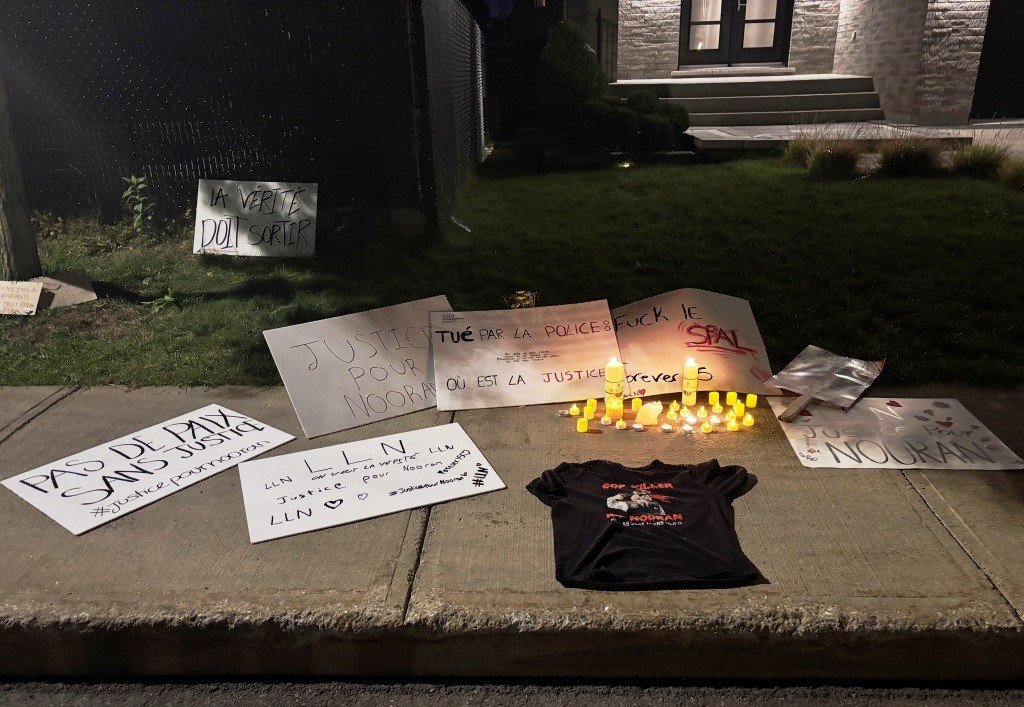
Then the mother of Marbens Dorelus, a young man shot dead in Anjou in July 2025, tries to speak out. Quickly overwhelmed by emotion, she struggles to finish her sentences, but soon gives up. In the circle formed by the participants, several women are wiping away their tears. One of them is in crisis. The emotional charge testifies to the depth of a phenomenon that now goes beyond the areas directly affected by the shootings.
“We live in a context where our young people face difficult realities,” said Kingslyne Toussaint, Executive Director of Équipe RDP, opening up about violence, school dropout and the effects on mental health.
“Young people live in a parallel world”
The meeting takes place at a time when several neighborhoods in Montreal, particularly in the east of the island, have been marked in recent years by shootings, arson, vehicle thefts and conflicts involving adolescents or very young adults. As recently as Thursday, May 14, a teenager was stabbed outside a high school in Saint-Henri.
During a media release on February 10, the director of the Service de police de la Ville de Montréal (SPVM), Fady Dagher, welcomed the 52% decrease in the rate of gun violence since 2021, while recognizing that the feeling of insecurity expressed by many Montrealers is well founded. Mr. Dagher also noted on this occasion that in 2026, his agents expect to be confronted with younger and younger adolescents and that they will be involved in crimes, including with the use of firearms.
In Rivière-des-Prairies, local counsellor Burt Pierre works daily with young people exposed to these realities. In charge of setting the table before the discussions, he painted before the parents a portrait that he himself describes as “alarming.” According to him, the current situation cannot be understood if we do not return to the episodes of armed violence that have marked Rivière-des-Prairies in recent years. Since 2017, he recalls, several incidents have shaken the neighborhood, including an armed conflict that has claimed the lives of three people in the community, including two young boys.
The speaker describes teens approached online to participate in car thefts, bullying, and arson. His observations on the ground coincide with those of the police. According to him, criminal recruitment is starting earlier and is now largely using social networks. “It's become cool to get involved in crime; so you will meet more young people at a younger age”, he warns, because “it's pleasant, there's a lot of adrenaline [...] I have young people I work with, it starts at the age of 12! ”
It's “cool”, and in addition, it pays off, adds Mr. Pierre, giving the payment range of $5,000 to $25,000, that a young person can earn for a car theft contract.
Faced with this rise in violence involving adolescents, governments and police services have increased the number of announcements since the pandemic. In March 2026, Quebec announced the financing of $1.9 million for 11 youth programs in Montreal aimed at preventing crime, while Ottawa has invested $5 million in the fight against crime in Montreal. The SPVM also states that it wants to intervene earlier with young people at risk in order to prevent them from falling into crime in a sustainable manner.
The fatigue behind “parental resignation”
Responsible for leading the conversation, mobilization agent Riguerre Antoine guides the participants in order to go as far as possible in their thinking and to avoid the shortcuts often associated with youth violence. Burt Pierre insists: according to him, the problem cannot be reduced to a simple lack of parental supervision. “Many parents work 40, 50, sometimes 70 hours a week, he recalls. It's not that they don't want to be there.”
In the room, several parents nod their heads and recognize each other in the portrait drawn up by the speakers. Two mothers from Rivière-des-Prairies who met after the activity evoke a permanent concern about adolescence. One of them tells La Converse that her son changed his behavior as soon as he entered high school. “It's as if he had moved away,” she said. And so we have to find out why.”
The other talks about the difficulty of reconciling parental supervision and financial pressure. “Parents are told to look after their children, but at the same time, you have to work to provide for the family,” she says, then adds: “With the cost of living, you can't always be everywhere.” The same mom mentions “a vicious circle,” because in her opinion, some teenagers end up looking for the money or social status themselves that they feel they can't get it any other way.
During the meeting, several participants also criticized the lack of resources in schools and community organizations. A mother says she had to find a private psychoeducator alone after episodes of bullying experienced by her son.
For some stakeholders, this fragility creates a favourable environment for criminal recruitment. “Young people are looking for a sense of belonging,” explains Burt Pierre. If the street becomes the place where they feel seen, protected, or valued, it will take that place.”
Refusing to lose your children
After the presentations, the microphone circulates freely among the parents. Many insist on their refusal to lose their children, and their desire to remain mobilized despite discouragement.
One participant says that it becomes difficult to intervene when a teenager shows incivility in the neighborhood. “Sometimes, you talk to a young person, and the parents come to blame you for your intervention,” she summarizes. For several participants, this loss of collective reflexes further weakens families.
Obenson Dorelus also comes back to this idea of shared responsibility, explaining that he grew up in an environment where several adults in the neighborhood participated in raising children, because “it takes an entire village to raise a child,” he repeats.
After the death of his son, he said he wanted to turn his pain into community action. Today, the Marbens Dorelus Foundation seeks in particular to offer spaces for dialogue for parents, young people and stakeholders, by advocating an approach centered on family support and prevention.
Beyond the observations, the meeting seeks to identify courses of action. Team RDP speakers emphasize the importance of local work, especially in disadvantaged neighborhoods. This approach guides in particular the Pivot Project, deployed in eastern Montreal after the increase in armed violence observed during the pandemic. The program focuses on a continuous presence with young people: at school, in sports activities, on the streets and even in detention when necessary. “To be present wherever young people are at risk of falling into crime, summarizes one stakeholder — before, during, after.”
Local solutions
Stakeholders also advocate an approach inspired by public health, rather than being strictly repressive. “Repression does part of the job, but it doesn't do all the work,” says Burt Pierre.
During the meeting, Burt Pierre describes several strategies implemented to maintain a link with adolescents: music workshops, individual support, premises accessible to young adults and employment support.
But prevention starts with the family home and the vigilance of parents. Those who are present at the chalet in Armand-Bombardier Park are invited not to minimize the situations of distress reported by adolescents. “The street will always make room for a young person who feels rejected,” summarizes Burt Pierre.
In particular, the latter encourages parents to be more interested in their children's online lives, to remain present when they travel and to create relationships with other families in the neighborhood. “Sometimes, just looking for a young person after basketball can avoid something,” he explains.
The objective is not only to prevent criminal acts, but also to offer concrete alternatives to adolescents who are looking for a place, recognition or a way out of precariousness.
At the end of this conversation, no miracle solution emerged. But for a few hours, parents, stakeholders and a bereaved family tried to rebuild something that many say is going to disappear: a collective capacity to intervene before the tragedies happen and become irreversible.
Resources:
Signs that may indicate distress in the young person:
• Sudden isolation and/or breakup with usual friends
• Significant changes in behavior or mood
• Decreased school results or absenteeism
• Cash, clothing, or expensive items whose origin is unclear
• Unusual secrecy around the telephone or social networks
• Anxiety, irritability, or unusual fear of going out or coming home
• Frequent conflicts at home or gradual closure to dialogue
Maintaining a dialogue with your adolescent:
• Ask open-ended questions rather than confront or accuse
• Take an interest in the adolescent's digital reality, especially if they are on Snapchat and Telegram
• Take advantage of simple moments (travel, meals, activities) to discuss without pressure
• Avoid trivializing a situation of bullying, fear or a change in behavior
• Maintain a link with the school, teachers and neighborhood stakeholders
In case of suspicion of criminal recruitment:
Team RDP stakeholders recommend not waiting for a situation to deteriorate. A young person who receives unusual gifts, seems to be under external pressure, changes his relationships abruptly, or becomes very secretive may need help quickly.
The objective is not primarily to punish, but to understand what is happening and to recreate a net around the young person.
Where to seek help without going to the police immediately:
• Neighborhood youth community organizations, such as Équipe RDP
• School workers, psychoeducators and social workers
• Youth centers
• Local response teams
• CLSC or youth psychosocial services