

The Rivière-des-Prairies—Pointe-aux-Trembles borough council chamber is full this evening on February 3. Families, students, a few retirees, community organizations. The chairs are quickly occupied, people are still standing in the background. The atmosphere is calm, almost ceremonial. We greet each other, we whisper, we wait. Nothing rowdy, nothing demanding. However, it is indeed a political issue that we are dealing with: public transit in eastern Montreal. At the desk, young people speak and open the session by officially submitting a notice entitled “Forgotten at the terminus: the network that turns its back on young people from the east”. In the room, several people are shaking their heads. The faces are attentive. Here, the question of mobility is not abstract. It is experienced on a daily basis, in missed connections, in full buses that pass without stopping, in journeys that last for hours. Reportage
The opinion of the Rivière-des-Prairies—Pointe-aux-Trembles Youth Council (RDP-PAT) provides a detailed portrait of travel in this vast district located at the eastern end of the island. The document mentions territorial isolation, multiple connections, irregular crossing frequencies and travel times that are higher than the Montreal average.
The observation is based on three axes: the impediment to the economic participation of young people, social exclusion resulting from the lack of mobility and the perpetuation of inequalities in access to education.
Alexandre Fabien Gagné, co-president of the Youth Council, summarizes what the document presents in tables and statistical data by means of a simulated trip. He lists the different stages of the journey for a student from Pointe-aux-Trembles who must go to the University of Montreal: bus to the Honoré-Beaugrand metro station, green line to Berri-UQAM, orange line to Jean-Talon, then orange line to Jean-Talon, then blue line to Jean-Talon, then blue line to campus. “Generally, it's an hour and a half. Minimum,” I know.
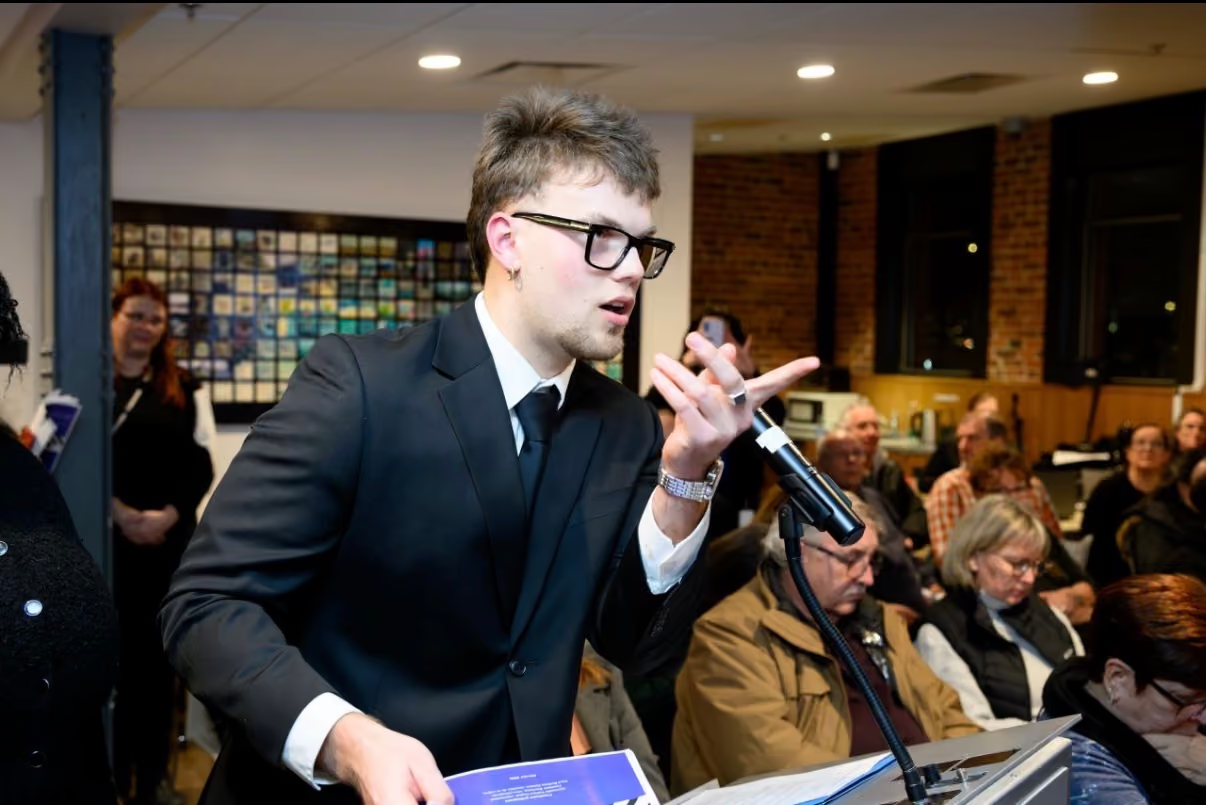
Photo: Sebastien Arbour
He adds, with a slight smile: “I am lucky. I don't have to change subway lines twice. It only takes me an hour and a half! ”
In the opinion, a comparison comes back as a symbol: in some cases, it may be faster to travel by car from Rivière-des-Prairies to the University of Quebec in Trois-Rivières than to reach the University of Montreal by public transport.
Young People Who Are Mobilizing
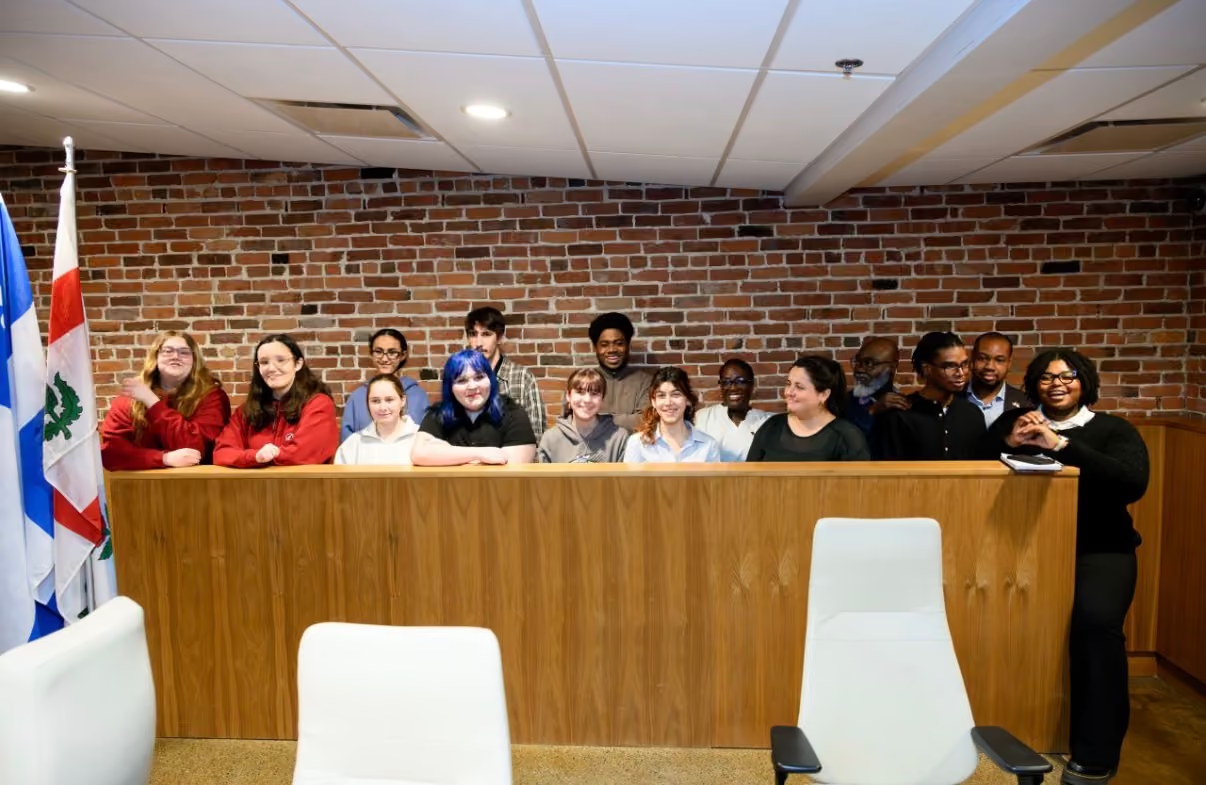
Photo: Sébastien Arbour
The evening of February 3 marks a stage. The Youth Council does not simply file an opinion before the borough council: this document declares a worrying situation and calls on the Quebec government with the support of MPs Pablo Rodriguez, Marc Tanguay and Paul St-Pierre Plamondon. It also provides support to a Petition to the Federal Government.
The mayor of the borough, Denis Pelletier, is present. In front of the audience, he praised the “exceptional work” of young people and their ability to formulate a vision. In his speech, he insists on the concrete nature of mobility: access to knowledge, to work, to sports activities, to essential services.
In an interview, Mr. Pelletier broadened the point: “We've been saying that for decades. People from the East pay their taxes like everyone else, but we don't have the speed to get to the subway.” He mentions crowded buses, spaced out traffic, and reserved lanes that are not always busy.
The formal filing of the notice takes place around 19:00 p.m., at the opening of the district council. The mission was entrusted to Alexandre Fabien Gagné, who briefly welcomed the audience and placed the document on the desk of the secretariat of the meeting, to the applause of the room and the proud looks of his colleagues and guests who, at that moment, were standing behind the Council table. A historic moment, which the co-president extends by giving a speech for the occasion.
In response to the youth initiative, the Mayor has committed to bringing the Youth Council's requests and concerns to the attention of municipal, metropolitan and provincial partners with whom he says he is actively collaborating. Asked by La Converse to know if a meeting is planned soon between the municipal council and the mobility authorities (STM, ARTM, etc.), the mayor replies that it is “not yet planned”, but that “it is part of our work in the coming days to plan such a meeting”, but that “it is part of our work in the coming days to plan such a meeting”,
For him, the emergency is on two levels: in the long term, a rapid structural line to the city center; in the short term, an increase in bus traffic. “When you wait 45 minutes or an hour, it's not easy.”
A Full Room, Calm Voices
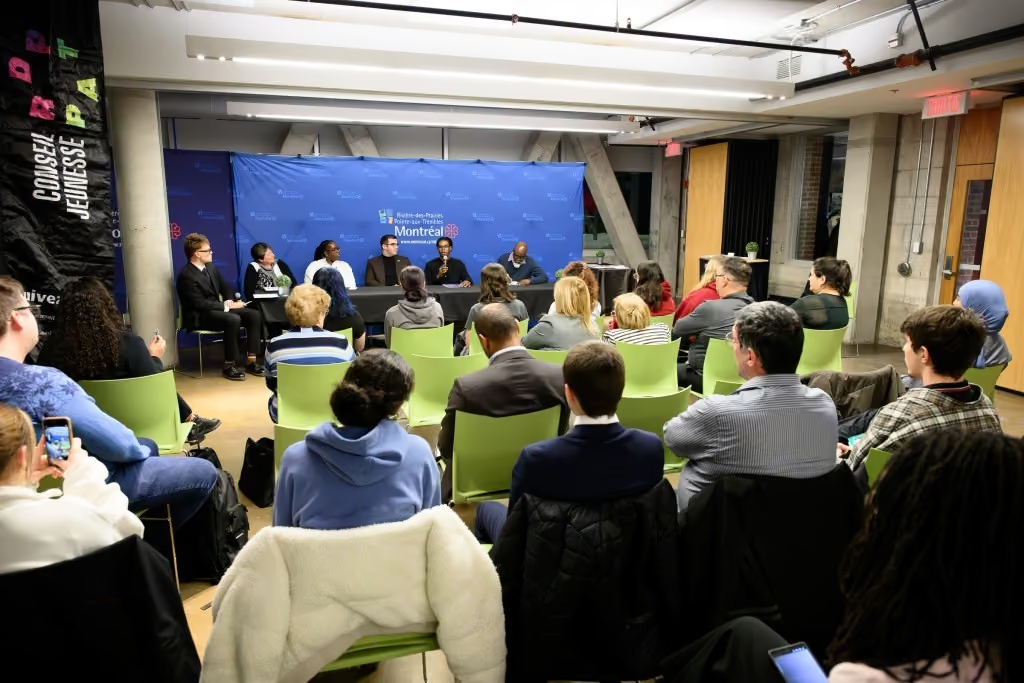
Photo: Sebastien Arbour
The evening takes place at the Citizen's House, which also houses the seat of the municipality. The packed hall gives the event a solemn air, almost like a solemn event for some. As if the assembly were discovering its own capacity to come together around a common issue.
Before appearing before the municipal council, the organizers led a panel discussion that allowed community actors, citizens, young people and elected politicians to explore the problem of transport by analyzing its various dimensions and repercussions on the neighborhood.
What was striking that evening was the contrast between the importance of the subject and the restraint of the exchanges. Participants speak up without raising their voices. Many know each other, meet in the neighborhood, and share the same bus lines. Young organizers, for their part, pay close attention to the success of their event and communicate with their eyes to make the necessary adjustments.
Comfortable in front of the microphone, the co-president of the Youth Council, Darlene Jean-Jacques, underlines the fact that the challenge goes far beyond simple logistical inconveniences. A student herself, she says she experiences “the reality of district transport day after day”, but especially insists on the collective repercussions observed in her exchanges with other young people.
“In every opinion, in every life experience of young people, there is always something about transport. The lack of mobility places them in vulnerable positions”, she explains, referring to an observation that came up again and again in the context of the study conducted by the Council.
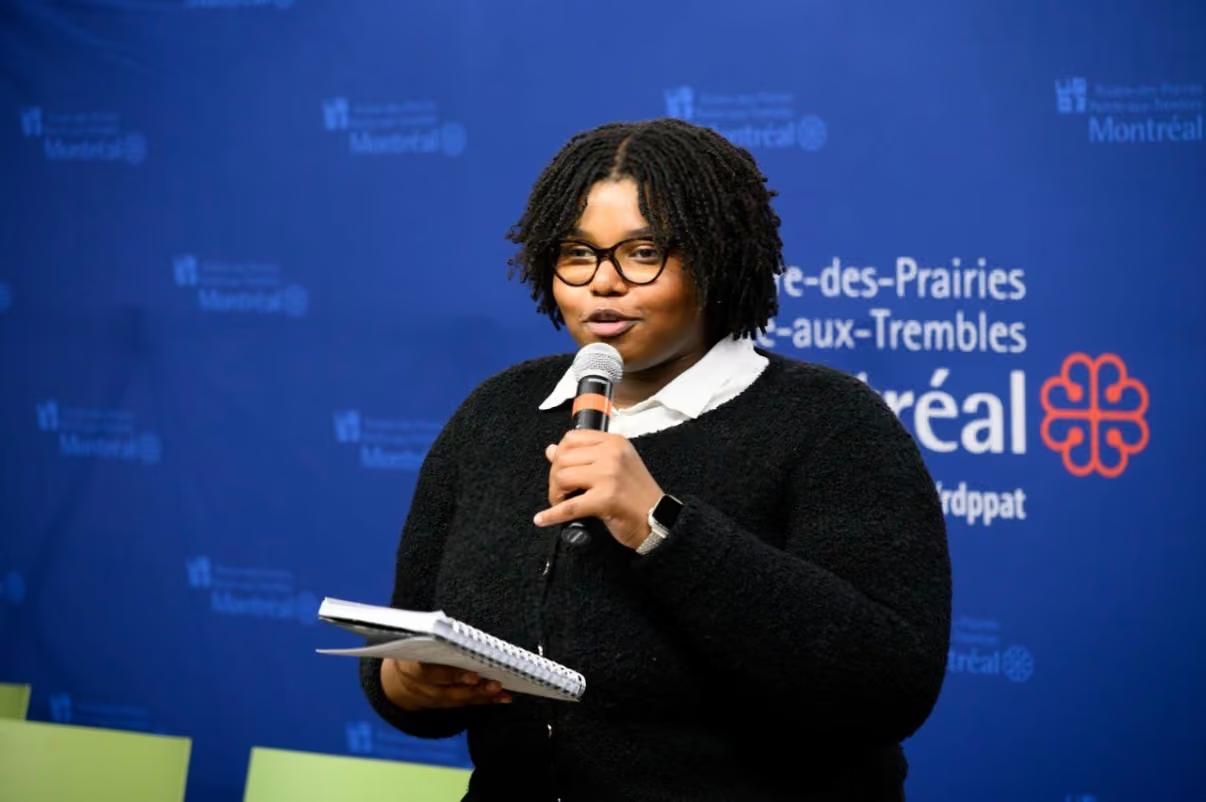
Photo: Sebastien Arbour
An intergenerational problem
While mobilization starts from young people, it is echoed by seniors. Gaëlle Noël, president of the Quebec Association for the Defense of the Rights of Retired and Pre-Retired Persons (AQDR) in Pointe-de-l'Île, describes trips that are becoming complex for this group of the population. “To go to a medical appointment, we sometimes reserve the whole day,” she explains in the front of attentive assistance. The spaced passage frequencies of STM buses cause delays, sometimes the loss of an appointment that is difficult to obtain.
It is true, she admits, that free transport is now guaranteed for the elderly, but this gain, obtained after years of demands, does not solve the question of frequency. “The problem is always frequency,” she repeats. “The problem is always frequency.”
She also mentions insulation. “Our children had choices to make: stay here and have to travel for three hours a day or go study elsewhere.” According to her, the departure of young people has an impact on the family support of seniors. “We cannot keep our young people closer to us. In East Montreal, a lot of people are isolated because young people have gone outside.”
Between mobility and safety
The issue of transport also extends beyond that of urban security. Invited panelist to the evening, Antoine Riis a mobilization agent in Rivière-des-Prairies. Involved in a project related to prevention, he elicited an immediate reaction to the announcement of his name, a sign of popularity that went well beyond the youth audience alone. Taking the floor, he establishes a direct link between mobility and the vulnerability of young people.
He talks about the difficulties in accessing leisure activities, complicated trips in the evening, and improvised solutions. “Young People Did Not Wait for the Network to Take Care of Them. They are finding solutions.”
These solutions include the frequent use of private transport services or peer-to-peer carpooling. He mentions choices made out of necessity rather than preference, sometimes in contexts that he considers risky. “Transportation is so difficult in East Montreal that you have young people who start risking... taking Lifts... with disreputable people”, says Mr. Ri, reminding the audience of certain tragedies in which young people in similar situations have been victims.
In the opinion of the Youth Council, an entire chapter is devoted to urban security. Long waiting times at poorly lit stops in remote areas are mentioned as factors of insecurity, especially for young women and the elderly.
Equal Access in Question
RDP-PAT is the largest territory of the City of Montreal in terms of area and has more than 110,000 inhabitants. Despite this density, the public transport network is mainly based on bus lines that converge at a few metro stations located on the immediate periphery of the district.
The opinion also recalls some structural projects that have not been implemented. When We Talk to Him About the Eastern Structuring Project (PSE), Mr. Pelletier was not very enthusiastic, thus reflecting the weariness of the borough's population following the numerous disappointments caused by the abandonment of projects. In the meantime, transitional solutions are being discussed: express reserved lanes, improvement of bicycle accessibility, formal consultations with young people during the redesign of bus lines.
Beyond travel times, mobility has an influence on academic and professional choices. The opinion notes that young people sometimes abandon certain specialized programs or attend remote institutions because of the length and complexity of travel.
Rides of 15 minutes by car can turn into trips of 45 minutes or an hour by bus. For families without a vehicle, this reality reduces educational opportunities in a concrete way.
“We're just asking for the same thing as everyone else”
In his speeches, Mayor Denis Pelletier often comes back to the principle of equality. “We're just asking for the same thing as everyone else.” In the room, this sentence seems to be echoed. The participants are not talking about exceptions, but about catching up. They describe a daily life made up of schedule calculations, safety margins added to each trip, repeated waiting in the cold or in the rain.
For its part, the STM explains, through its corporate public affairs advisor Laurence Houde-Roy, by listing the measures taken since 2018 to improve its services in both districts: commissioning of line 81 connecting Rivière-des-Prairies to Pointe-aux-Trembles, improving the service of Cégep Marie-Victorin with line 439, stops adding and services on various taxi services collective in sectors 285 Anjou—Rivière-des-Prairies Station and 289 Pointe-aux-Prairies Station and 289 Pointe-aux-Prairies Station and 289 Pointe-aux-Prairies Station.
Asked by La Converse about possible improvements planned soon, the same manager cited two ongoing studies: “We are carrying out analyses of certain transport corridors in the sector in order to improve the performance of the lines”, she explained, before adding: “We are also in analysis, with the ARTM, for the creation of certain metropolitan corridors, including one in the east.”
The evening ended without any particular brilliance. Once their opinion has been submitted to the elected officials, the young people leave the borough council chamber with contained joy, their faces showing a certain relief. We shake hands, we exchange a few words, we head back — often by bus, sometimes with several connections.
Alexandre Fabien, Darlene, Joyd and their colleagues in the youth council are aware that they have taken an important step forward. Their opinion is now submitted, and their vote recorded in the minutes. Mission accomplished, only in part. Because everyone also appreciates the extent of the road that remains to be covered so that these repeated approaches, these meetings and these speeches end, one day, in translating into tangible changes and that their efforts finally find their full impact.
Did you like this article?
Every week, stories like this are sent directly to your inbox.
.jpg)