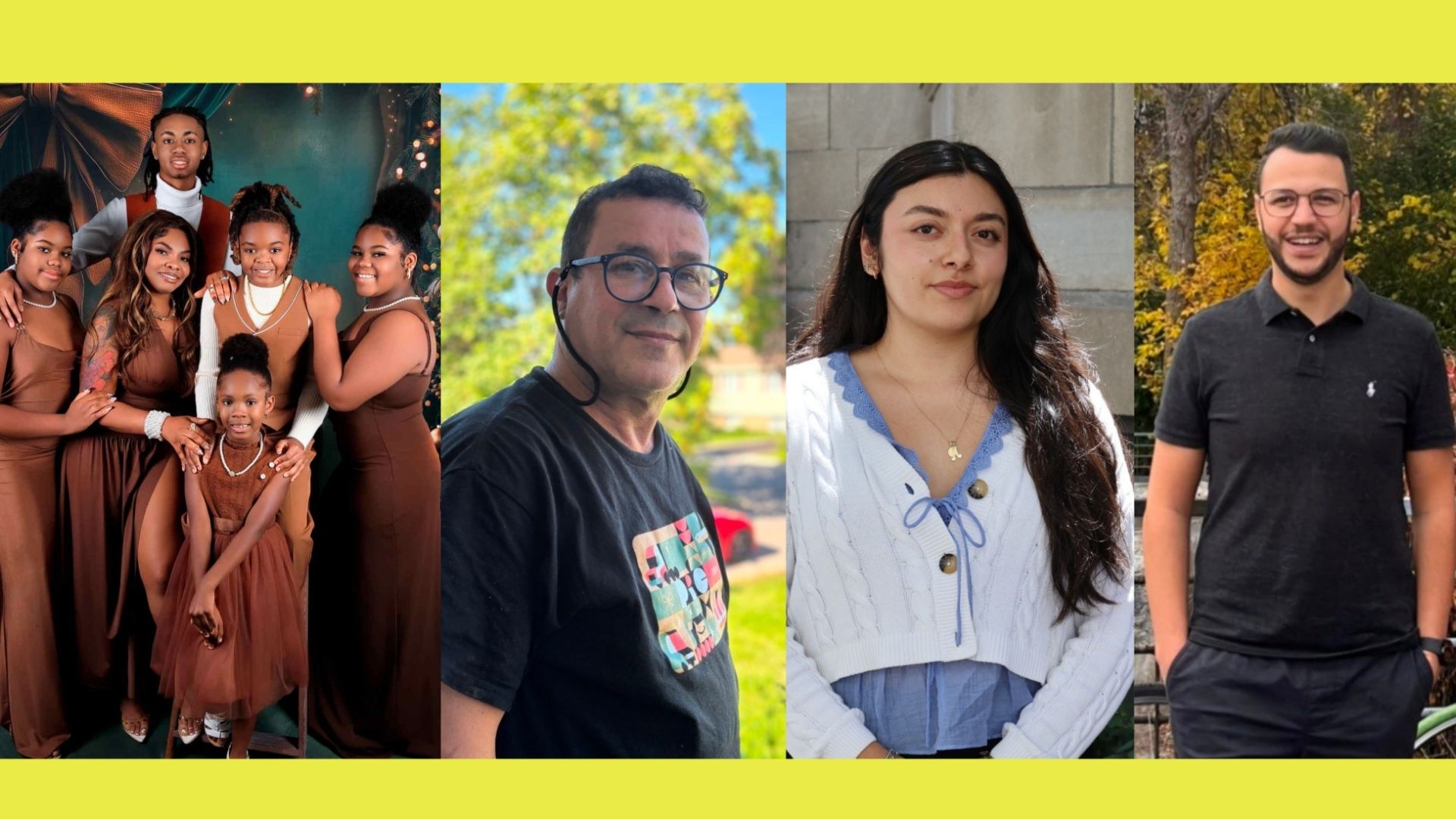

For many Montréal-Nord residents, the revelations concerning 16 police officers from neighbourhood station 39 did not come as a surprise, but rather a sense of déjà vu. Citizens, community organizations, and stakeholders recount experiences they say they have been denouncing for years. A report on those who claim to live with the consequences of racial profiling and those who are trying to repair its effects.
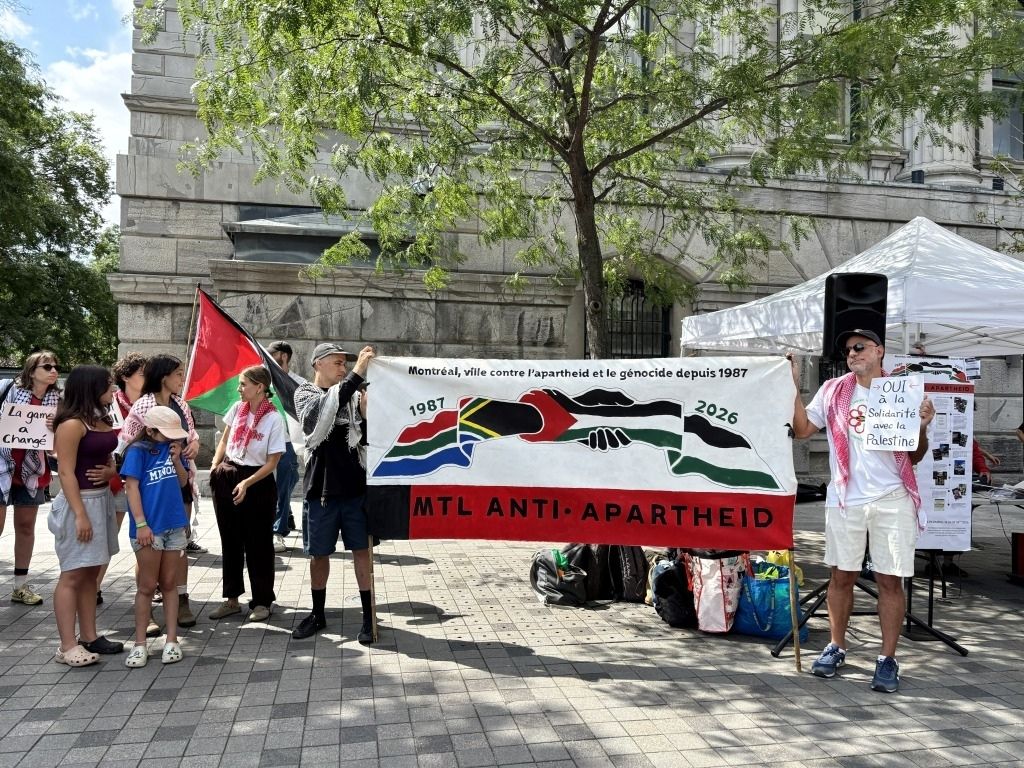
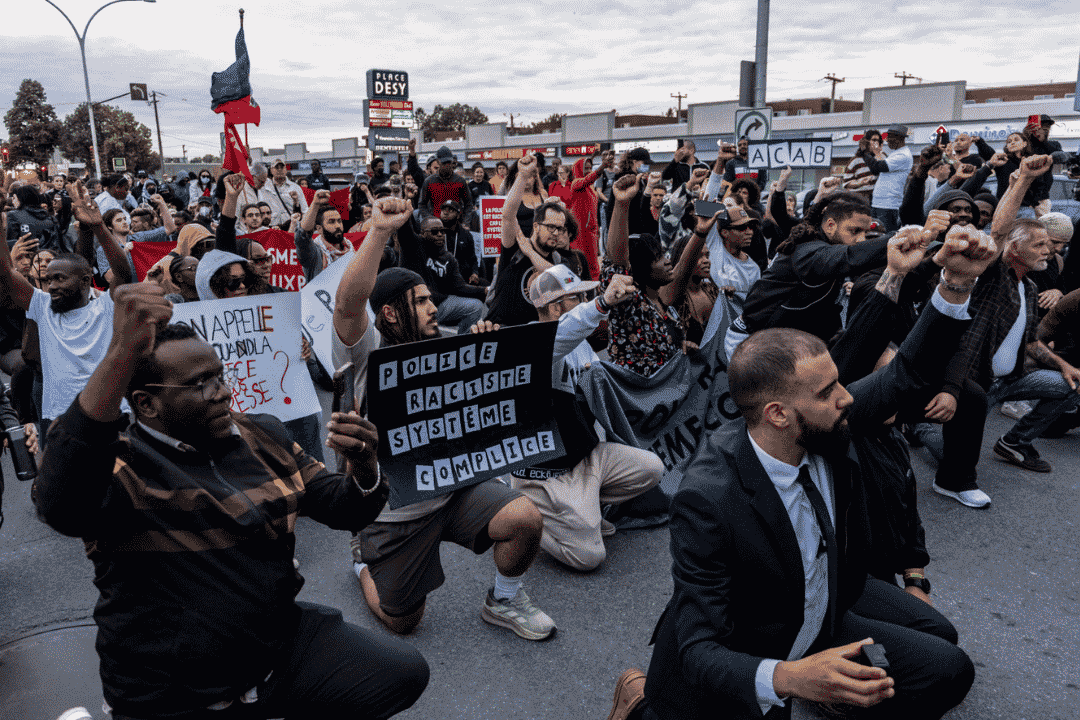
Leaning on a crutch, her gaze fixed on the group, Karen walks determinedly down Langelier Street to catch up with the protest. It's around 8:30 PM, and the demonstrators, initially gathered in front of Montréal-Nord's neighbourhood station 39 (PDQ 39), decided to march through the neighbourhood streets and shout their anger and indignation following the allegations targeting officers from that station.
The Lacordaire Boulevard resident could have stayed home, but as soon as she heard about the protest, she took to the streets. "I had to be here," says the Quebecer of Mexican origin, struggling to quicken her pace alongside her daughter and partner. Karen joined the march despite her mobility issues because she says she recognizes in this situation a part of what her own son experiences.
A 17-year-old student at Henri-Bourassa high school, the young man has allegedly been targeted multiple times by neighbourhood police officers. "Every time he's with his friends, it's the same officers who follow him, stop him, and tackle him to the ground," she recounts. On her phone, she shows videos and photographs she has kept for months. Some images show marks left by handcuffs.
In one of the incidents that particularly affected her, her son was brought home by police officers who suspected him of stealing a vehicle. "I asked them: 'If he stole a car, why are you bringing him home?' They laughed at me," she recalls, indignant.
Forty-eight hours after Fady Dagher's shocking revelations, people are (once again) speaking out in Montréal-Nord to recount daily scenes, similar to those of Karen and her son. And here, no one claims to be surprised by what the Montreal police chief seems to be discovering.
Karen is not the only face of this anger. Further on, Mahmoud Canly is also participating in the protest. The Quebecer of Kurdish origin states he is there because he recognizes in the current revelations an experience that deeply affected his family.
In the summer of 2023, police officers intervened at his home after a report related to his youngest daughter's cries. When Mahmoud arrived after work, several police cars were in front of the residence. His wife and teenage son were separated for questioning.
Three years later, he states that the physical and psychological scars are still present. "My wife is not doing better psychologically. She is still hurting. Every time she saw the living room of our old house, it reminded her of that incident." The couple eventually sold their residence to move to another area of Montréal-Nord. "We changed houses just to have peace of mind," he recounts.
The family filed a complaint and took various steps, but Mahmoud believes he never received satisfactory answers. "They denied the facts. That hurts even more [...] They are stronger."
He explains that if he is participating in the press conference and the march today, it's because he doesn't want other families to go through the same thing. "This has to stop. We are in a civilized society. I know there are good police officers. Those who see things must have the courage to denounce them."
"We are outraged, but unfortunately not surprised"
A few hours before the protest, representatives of the Haitian-Origin Stakeholders' Group (RIIOH) were gathered at the Café-Jeunesse Multiculturel on Pascal Street. The group was reacting to revelations that 16 police officers from PDQ 39 are subject to administrative measures following allegations of racist remarks and behaviour, targeting Black and Arab individuals in particular.
In its press release, RIIOH speaks of "serious, revolting, and unacceptable" revelations which confirm what citizens, families, youth, and organizations have been denouncing for years: the existence of discriminatory behaviour and practices that penalize many Black and Arab residents. Testimonies of racial profiling, discrimination, and differential treatment have too often been minimized, questioned, or ignored. "Today, we are outraged, but unfortunately not surprised," summarizes the group's spokesperson, Sheila Fortuné.
For RIIOH, the issue extends far beyond the targeted officers. The group rejects the idea that the matter should be reduced to the actions of a few individuals and believes it raises systemic questions of governance, accountability, and trust between institutions and communities.
The scandal shaking the SPVM
Last Friday, the director of the Montreal Police Service (SPVM), Fady Dagher, announced the suspension of 2 officers and the removal from duty of 14 other members of PDQ 39. The internal investigation was launched after officers from the precinct themselves reported behaviors deemed unacceptable within their unit.
The revelations quickly sent shockwaves. The League of Rights and Freedoms is calling for a public inquiry into racism within the SPVM and the abolition of police stops.
The mayor of the Montréal-Nord borough, Christine Black, stated that the revelations rekindled "old wounds and experiences" for many citizens, particularly within Black, Arab, and racialized communities. "Any form of racism, discrimination, or racial profiling is unacceptable," she added, believing that institutions had "not yet done enough to curb racism."
Montreal's new mayor, Soraya Martinez Ferrada, also acknowledged the existence of systemic racism. "I want to address the citizens of Montréal-Nord, all those who, one day, felt watched, targeted, profiled [...] We live in a society where systemic racism exists," she declared.
In Quebec City, Premier Christine Fréchette called for a swift and full investigation into the matter, while Public Security Minister Ian Lafrenière described the allegations as "completely unacceptable and shocking."
"A hundred times"
Samuel Bunche doesn't need to think long when asked if he has ever experienced racial profiling. "Enormously," he replies. The 30-year-old Montréal-Nord resident says he grew up in the neighborhood. A martial arts athlete, he is involved in several community activities and estimates he has been stopped by the police "a hundred times" in his life. "I've often been arrested, put in police cars, questioned. I'd say at least a hundred times," he confides to La Converse.
He recounts several interventions that, in his opinion, amounted to racial profiling. One of them, in Laval, led to a civil lawsuit. After three years of proceedings, the City of Laval acknowledged the existence of racial profiling in his case and paid him compensation. But it's not this episode that affected him the most. What worries him more, he says, is the normalization of these experiences. "So many situations happen that it becomes normal. That's the problem. It happens so often that we're exhausted. We tell ourselves: 'It's going to happen again tomorrow, again next week.'"
According to him, this resignation is widely shared in the neighborhood. "Every day, we hear stories. Nothing surprises us anymore. It happens so much that it no longer surprises us." The revelations about PDQ 39 therefore did not astonish him. "What's surprising is how it was done and the fact that they acknowledge it. Because it has often been denied." Over the years, these experiences have also had more personal effects. Samuel says he feels a form of anxiety every time he encounters police officers. "When I see the police, I ask myself: 'Did I do something wrong? Is it for me?'" A reaction he considers abnormal. "I'm not a stressed person in life. But when I see the police, I question myself, and this anxiety rises. That shouldn't be normal. I shouldn't feel that way when I see the police."
Those who pick up the pieces
To understand why the revelations about PDQ 39 are causing more anger than surprise in Montréal-Nord, one must visit community organizations. It is at the premises of the Café-Jeunesse Multiculturel, where RIIOH held its press conference, that Slim Hammami receives young people from the neighborhood every day. For the organization's director, the scandal is not a new discovery. "We were surprised," he says, "by the scale, by the number of officers involved, and by the measures announced. But regarding the actions themselves, no. This has been happening in Montréal-Nord for years."
Accounts of police interventions are part of the organization's daily life. "The vast majority of young people we welcome have stories involving the police. We support them, we listen to them. We have plenty of stories," says Mr. Hammami. According to him, the real novelty lies in the fact that these behaviors are now publicly acknowledged: "Perhaps what happened will awaken some consciences."
While many recall the 2008 riots after Fredy Villanueva's death, Slim Hammami does not believe a similar scenario will unfold, reminding that the young man's death had served as a trigger after years of accumulated tensions.
Eighteen years later, however, he fears that promises of change will meet the same fate as after 2008. "We played along. We collaborated. We created spaces for discussion. Then, things were somewhat forgotten," he laments to La Converse.
For him, the persistent stigmatization of Montréal-Nord and crime issues sometimes serve to justify certain police behaviors. "We must remember one simple thing: in Montréal-Nord, we are in a place governed by law, and police officers must do their job correctly."
The RIIOH now wishes to meet with SPVM Director Fady Dagher. "We have a very strong presence in the neighbourhood. We hope to be heard and that discussions will stem from what people are actually experiencing on the ground."
Isolated incidents or a systemic problem?
In Montréal-Nord, another question keeps coming up in conversations: how can it be explained that so many residents claim to have had similar experiences for years?
For Salim Baghdadi, a sociologist and urban security coordinator at the Montréal-Nord Neighbourhood Roundtable, the community's reaction is not surprising. "Young people, families, and residents have been sharing certain experiences for years. Organizations and outreach workers have been hearing them for a long time," he states.
According to him, each police intervention is generally examined as an isolated event. But when similar accounts accumulate over years, they paint a broader picture. "An individual experience can always be interpreted in different ways. But when several people who don't know each other describe comparable situations, it becomes a social phenomenon that must be taken seriously."
Without commenting on the ongoing investigations, the sociologist already observes the consequences of this accumulation of accounts, because, he points out, "when a segment of the population feels that they will not be treated the same way as other citizens, trust in institutions gradually erodes."
This distrust also affects complaint mechanisms: "Many people tell us they don't see the point in filing a complaint because they feel it won't change anything." For Salim Baghdadi, the PDQ 39 affair therefore goes beyond individual responsibilities and raises the question of the relationship between a public institution and a segment of the population it is supposed to serve.
He does, however, highlight a hopeful element: the reports that initiated the investigation came from police officers themselves, and "this shows that even within the institution, some individuals refused to remain silent." It now remains to be seen whether this self-examination will help rebuild trust that has long been fragile.
A march towards an unforgettable memory
Around 10 p.m., protesters arrived in front of Henri-Bourassa Park, where Fredy Villanueva was killed by a police officer in August 2008. Eighteen years later, his name continues to surface in conversations whenever relations between the police and the neighbourhood resurface.
For many participants, the march's destination is highly symbolic and serves as a reminder that current debates are part of a much longer history. A history marked by distrust, wounds, and promises of change.
Today, community organizations see the revelations from PDQ 39 as an opportunity to reopen a discussion they have long deemed necessary. It remains to be seen whether this time, they say, the residents of Montréal-Nord will truly feel heard.
.jpeg)