
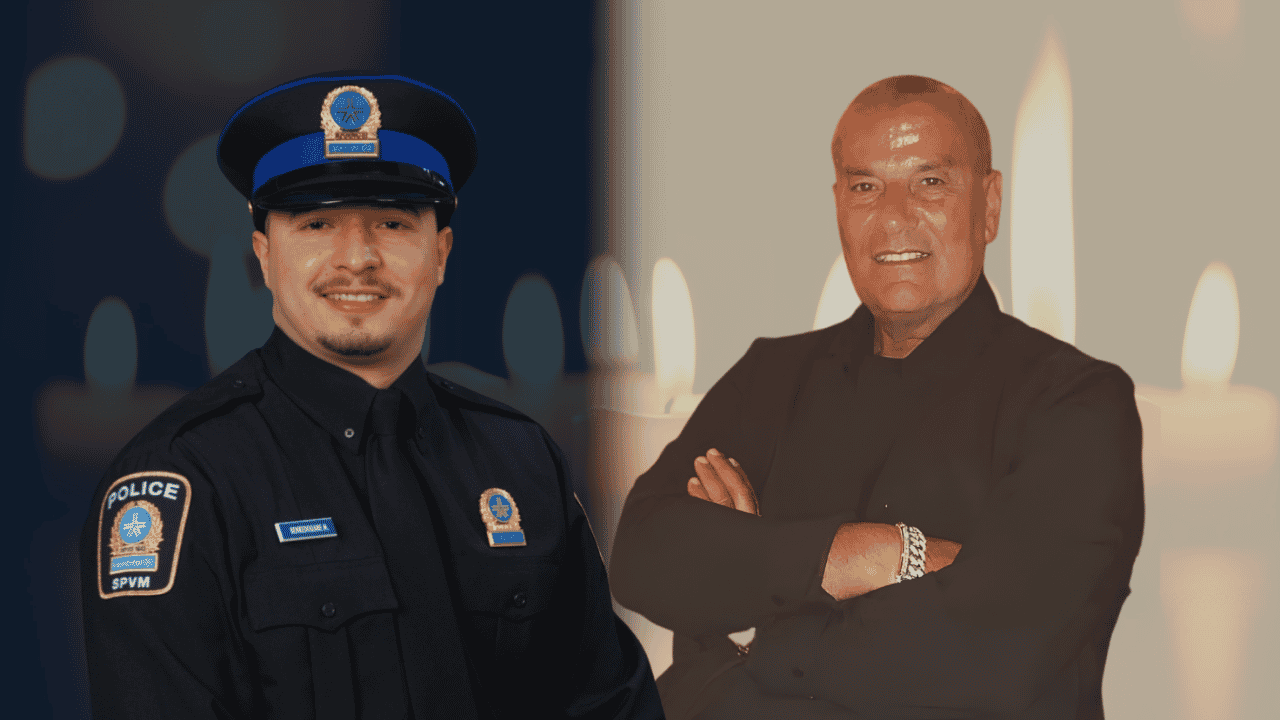
On June 22, 2026, shortly before noon, an armed attack in the Côte-des-Neiges district claimed the lives of three people: Montreal Police Service (SPVM) officer Mohamed Lamine Benredouane, civilian Michel Moshe Mizrahi – the exact circumstances of whose death are still under investigation by the Bureau des enquêtes indépendantes (BEI) – and the shooter, Seth Scott Hatfield.
In the hours that followed, images of the shooting quickly spread across social media. They were shared, commented on, and analyzed even before all information was confirmed. According to loved ones, some family members learned of their relative's death through the media or online images.
Very quickly, the tragedy left the scene of the attack to play out on social media, where many tried to interpret it based on the presumed origin, religion, first name, uniform, or affiliation of those involved.
On the ground, however, the tributes tell a more complex story: a Muslim police officer named Mohamed mourned in Greater Montreal, despite a deep distrust of the police, and a Jewish man, Michel Moshe Mizrahi, for whom there is no evidence to date that he was targeted because of his religious affiliation, and whom his loved ones describe as a man who reportedly tried to help others find shelter. In these moments of grief, La Converse examines the reactions, fears, and prejudices that such a tragedy can reveal.
In Little Maghreb, a Moment of Silence Before the Match
On the evening of June 22, a few hours after the attack in Côte-des-Neiges, Algeria was playing Jordan in the World Cup. On Jean-Talon, in the heart of Little Maghreb, Algerian supporters had gathered as they often do on match nights. But this time, the atmosphere was somber.
Before the match began, Algerian supporters observed a moment of silence to pay tribute to Mohamed Lamine Benredouane, an SPVM officer of Algerian origin, who was killed earlier that day. In the crowd, flags, jerseys, and chants gave way, for a moment, to a heavy silence.
This moment already speaks to the complexity of this tragedy. Mohamed Lamine Benredouane was a police officer, but he was also Mohamed. He wore the SPVM uniform, but he also carried a first name, an origin, and a history with which many identified. In a context where some social media comments were already linking the attack to Islam or immigration, this moment of silence served as a reminder of a reality that is harder to categorize: this time, the "Mohamed" of the story is the one who fell while protecting citizens.
The following evening, La Converse returned to the Petit Maghreb. Several people agreed to speak, but anonymously and without showing their faces. The fear was palpable. Some said they were afraid of being recognized, while others mentioned the possibility of retaliation, fines, or tensions with local police officers.
Recent revelations about racist behaviour at Neighbourhood Police Station 39 (PDQ 39) in Montréal-Nord quickly came up in conversations. "With what happened at PDQ 39, we see how they treat us, and it scares us," confided one person met on site. For many, trust in the police remains fragile, sometimes even broken.
However, the death of Mohamed Lamine Benredouane complicates this relationship. Those who express distrust towards the police institution also speak of sorrow, respect, and solidarity for the fallen man. In the comments gathered on Jean-Talon, one idea kept recurring: beyond the uniform, it was also "one of our own" who died. A brother, a son, a man from a community that, despite its wounds and fears, wanted to pay tribute to him.

On the Road to the Final Tribute
Laval, Wednesday, June 24, 2026, at 8 p.m. On Quebec's National Holiday, the atmosphere is usually festive. This year, for many citizens, colleagues, and families, Saint-Jean-Baptiste Day had a very different feel.
Long before reaching the Hamza Islamic Cemetery, the first tributes to Mohamed Lamine Benredouane were visible. Along Highway 15 towards Laval, under a cloudy sky, Laval Police Department officers and firefighters were stationed on several overpasses overlooking the road. Quebec and SPVM flags were hung from the guardrails. As their colleague's funeral procession passed, they all paid their final respects, hand to forehead.
As one approached the cemetery, traffic became denser. Parking lots quickly filled up. Police officers directed motorists to improvised spaces, particularly along the bike path on Lévesque Boulevard East. From there, it was still about a fifteen-minute walk to reach the cemetery.
Along the way, a crowd of citizens moved in the same direction. Men, women, children, seniors; people of different origins, religious affiliations, and communities converged on the same place. In the crowd, a young man struggled forward with crutches. All seemed driven by the same desire: to pay a final tribute to Mohamed Lamine Benredouane.
The route passed through a residential neighbourhood. In front of several houses, families came out onto their porches to observe the silent procession of hundreds of people heading towards the cemetery. The closer one got to the site, the more profound the silence became.
Inside the cemetery, rows of people who came to pay their last respects to Mohamed Lamine stretched for a long distance, far beyond his resting place. Faces around the grave were marked by emotion, gazes often lowered.
Mohamed Lamine Benredouane, 34, originally from Skikda, Algeria, leaves behind his wife, pregnant with their second child, and a three-year-old child.
The officer's colleagues, almost all dressed in black, held his portrait in their hands, along with white flowers. Only a few officers still wore their uniforms. Hugs were exchanged. Some whispered a few words, others wiped away tears while family members greeted the many people who came to offer their condolences.
When the imam began to speak, silence fell. All eyes remained on him. With each invocation (du’a), hundreds of voices rose in unison: "Amen." A moment of contemplation accompanied the prayers for Mohamed Lamine Benredouane.
In his address, the imam reminded everyone that in Islam, it is important to remember a person's good deeds and to pass them on after their death, as they continue to benefit them. He described the deceased as a devoted man.
"Mohamed Lamine was a helpful man, always ready to assist others. Every morning, he left his home to perform his duty and protect citizens, leaving behind his wife and child, never knowing if he would return home safe and sound."
The imam then describes him as shahīd (شهيد), a term that, in Islamic tradition, refers to a person considered to have died as a martyr. According to him, Mohamed Lamine attained this status because he lost his life protecting citizens in the line of duty. He emphasizes that, in Muslim tradition, dying as a shahīd is considered one of the most honorable deaths.
“Momo was the very definition of a positive leader”
For many of his colleagues, Mohamed Lamine Benredouane leaves behind the memory of a deeply committed police officer, but above all, a man loved by all.
“Momo was the very definition of a positive leader,” says one of them, pausing as if searching for words. “You couldn't spend two seconds with him without laughing. He brought people together and led by example.”
According to this police officer, who prefers to remain anonymous, Mohamed paid great attention to detail. Before each shift, he would arrive early to meticulously prepare his equipment, a habit he had maintained since his training at the École nationale de police du Québec a few years earlier. He shined his boots, cleaned his gear, and made sure his uniform was impeccable. “He wanted the police image to look good,” he explains.
Having grown up in Côte-des-Neiges until adolescence, Mohamed had chosen to return there to work as a police officer. According to his colleagues, he maintained excellent relationships with citizens and was appreciated by both the community and his fellow officers. “He loved what he did. His mission was always to help others, no matter the time,” one of them summarizes.
At police station 26, where about 170 officers work, his name was known to everyone, his colleague recounts. “Everyone knew him, everyone talked to him.”
Several police officers interviewed state that his death deeply shook not only the members of PDQ 26, but also the entire SPVM. One of them confides that, since Monday's events, opportunities to smile have been rare. According to him, it was only after the ceremony, seeing colleagues, loved ones, and family members gathered around Mohamed, that some found a moment of comfort.
Deconstructing Prejudices
Footsteps slowly make their way towards the parking lots, while the family continues to receive condolences. As they leave the cemetery, discussions gradually resume. Many evoke Mohamed's memory, while others express hope that his death will challenge certain prejudices that are still very much present.
A police officer, who prefers to remain anonymous, takes a few moments to share his thoughts.
“When people hear the name “Mohamed,” some have preconceived notions. This time, the Mohamed in question was not the terrorist. He was the police officer who lost his life protecting citizens. I hope this will make some people think.”
A few days later, Amine Tessa, a content creator active on social media, echoes this sentiment. According to him, the first few hours following the shooting were marked by rumors that quickly fueled certain stereotypes.
“As soon as there's an attack like that, some immediately associate the crime with an immigrant. We see comments like: 'It's another Muslim' or 'Import the Third World, become the Third World,' he tells us."
For Amine, the fact that it was ultimately a police officer named Mohamed who lost his life protecting citizens should lead us to question these knee-jerk reactions.
Once the identities of the victims and the shooter were finally confirmed, a very different picture emerged: Mohamed Lamine Benredouane, the officer who died during the police intervention, was a Quebecer of Algerian origin; Michel Mizrahi, the civilian who died, was a Quebecer born in Lebanon and a well-known member of the Côte Saint-Luc Jewish community; and the shooter was a Canadian from Alberta.
This tendency to quickly interpret tragedy based on group affiliations is also reflected in the thoughts of Mohamed Lotfi, a journalist and artist, published the day after the shooting. In his text, he states that he is not trying to analyze the shooter's motives, "but rather to question our collective way of reacting to death and suffering out of an instinct of fear."
For him, "this media sequence revealed a familiar phenomenon": "As soon as the victims were identified, the discourse began to revolve around group affiliations." According to Mr. Lotfi, initial reactions, particularly on social media, showed how quickly, in a moment of crisis, people can be turned into symbols, sometimes even before the facts are fully established.
"When a society allows itself to be governed by fear, it simplifies everything. It transforms human beings into symbols. It replaces faces with affiliations," he writes.
This logic, which Mohamed Lotfi describes as "one of the deepest maladies of our time," encourages commenting, interpreting, and choosing a side even before taking the time to see the people behind the identities attributed to them.
Amine Tessa emphasizes the need for caution. He understands that Mohamed's origins are being highlighted today to deconstruct certain prejudices. However, he warns against the risk of reducing a person to their origin. "I don't want us to fall into that trap. Ultimately, a Quebecer is a Quebecer. A first name, an origin, or a religion says nothing about a person's courage and values," he concludes.
Mohamed's loved ones, for their part, prefer to speak about the person they knew. They all paint a picture of a man deeply devoted to his family, always smiling, positive, and generous. With a broken voice, still shaken by the events, one of them confides: "Mohamed didn't deserve to die, much less to be killed by this individual."
In Côte-des-Neiges, several young people say they are "deeply affected" by the death of Officer Benredouane. They explain that they had interacted with him on several occasions in his capacity as a police officer. "It's true that as young people, we have preconceived notions about police officers, but he always treated us with respect," one of them recounts. All the young people interviewed describe him as "a very good person."
The tributes to the deceased, however, do not end with this ceremony. The SPVM announced that he will be honored with a public civic funeral on July 7th at the Bell Centre.
On the same day, a few kilometers from the Hamza Islamic Cemetery, another family and another community gathered to mourn and say goodbye to Michel Mizrahi, the civilian killed by a police officer during the same tragedy.
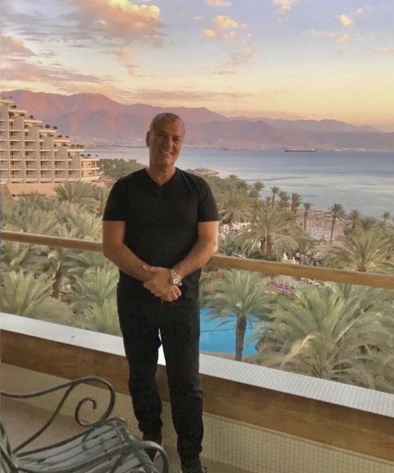
"The entire community is in shock"
In the first hours following the shooting, while little information was yet confirmed, rumors suggested a possible antisemitic attack. Here again, the tragedy was quickly interpreted through the lens of group affiliation. However, subsequent testimonies would complicate this initial version of events: Michel Mizrahi was not targeted because of his Jewish identity, according to information available to date. Several community members instead state that he reportedly tried, during the initial exchange of gunfire, to help people take cover.
The day after the shooting, Côte Saint-Luc city councillor Mike Cohen posted a video on Instagram showing him in front of the Beth Chabad synagogue, where the community was already beginning to gather to pay tribute to Michel Mizrahi.
"The entire community is in shock," he states.
Michel Mizrahi, 68, resided in Côte Saint-Luc and had attended this synagogue for many years. According to Mike Cohen, he worked in custom clothing and was in the Côte-des-Neiges area for professional reasons at the time of the attack. He was then supposed to meet his son for coffee at Heal, an appointment that would ultimately never take place...
Mike Cohen adds that, according to synagogue members, Michel had health problems, but he faced them with great courage and stoicism.
The rabbi, who had known Michel Mizrahi for many years at Beth Chabad, remembers him as "a man of great kindness," always smiling and always ready to help others. He recalls that Michel regularly came to the synagogue with his son and occupied a seat in his name, identified as "Mizrahi Michel – C8."
According to the rabbi, several testimonies gathered after the tragedy indicate that Michel Mizrahi helped a mother and her child to safety before losing his life. "He sacrificed himself for others," he summarizes.
"A man with a big heart"
On Wednesday, June 24, at 9:45 a.m., under clear skies, family, friends, and members of the Jewish community gathered at Paperman & Sons funeral home to say their goodbyes to Michel Mizrahi.
Inside, the crowd was so dense that many people stood in the establishment's entrance. When the coffin was carried outside, embraces multiplied. Loved ones held each other tightly. Many attendees wore sunglasses, behind which, at times, tears could be glimpsed.
In the funeral home parking lot, community members testified that Michel Mizrahi, in the moments following the start of the shooting, instinctively pushed people inside a neighboring business to safety, thereby saving their lives.
Among those who came to pay their last respects was Alain Pereque, a friend of Michel's since their childhood in Beirut, Lebanon. He describes him as "a man with a big heart, always positive, always smiling."
"That was Michel," he simply said, his voice heavy with emotion.
On social media, tributes poured in: "He was an extraordinary man," "What an incredible man, gone too soon," "A beautiful soul left this world too early. We miss you, Michel." Hundreds of messages all saying the same thing: Michel Mizrahi mattered and leaves an immense void within his community.
In the case of Michel Mizrahi, as with Mohamed Lamine Benredouane, initial accounts quickly highlighted their affiliations. Yet, these two men, whom everything seemed to separate, were brought together by the same tragedy, caused by the violence of a white man.
On June 24, 2026, their loved ones paid tribute to them, not as symbols, but as beloved individuals. Two lives brutally cut short, two grieving communities, and a single lesson silently left for all.

%20(1).avif)