
A study on the mental health of young people of Maghrebi descent shows that a majority of them do not know who to turn to when going through a difficult time. In Montreal, young people share what lies behind this finding: some keep their struggles to themselves, others find support within their social circles, and those who do seek help from available resources may encounter issues with trust or understanding.
At François-Perrault Park in Saint-Michel, the question seems simple enough: when things aren't going well, who can you talk to? Yanis* shrugs. He knows about moments of loneliness, difficult days, and conflicts with others. But his first instinct isn't to look for a professional. "I'll handle it myself," he says curtly.
It is in the privacy of La Station, a recording studio created for and by young people at the Saint-Michel Community Leisure Centre (LCSM), that he opens up to La Converse. His friend Marouane*, who is with him, has a different story. When his struggles became too much, the young man in his twenties found support from his family, and then from a friend.
Two different paths, but the same question: what do you do when a young person is struggling but doesn't necessarily know where to look for help?
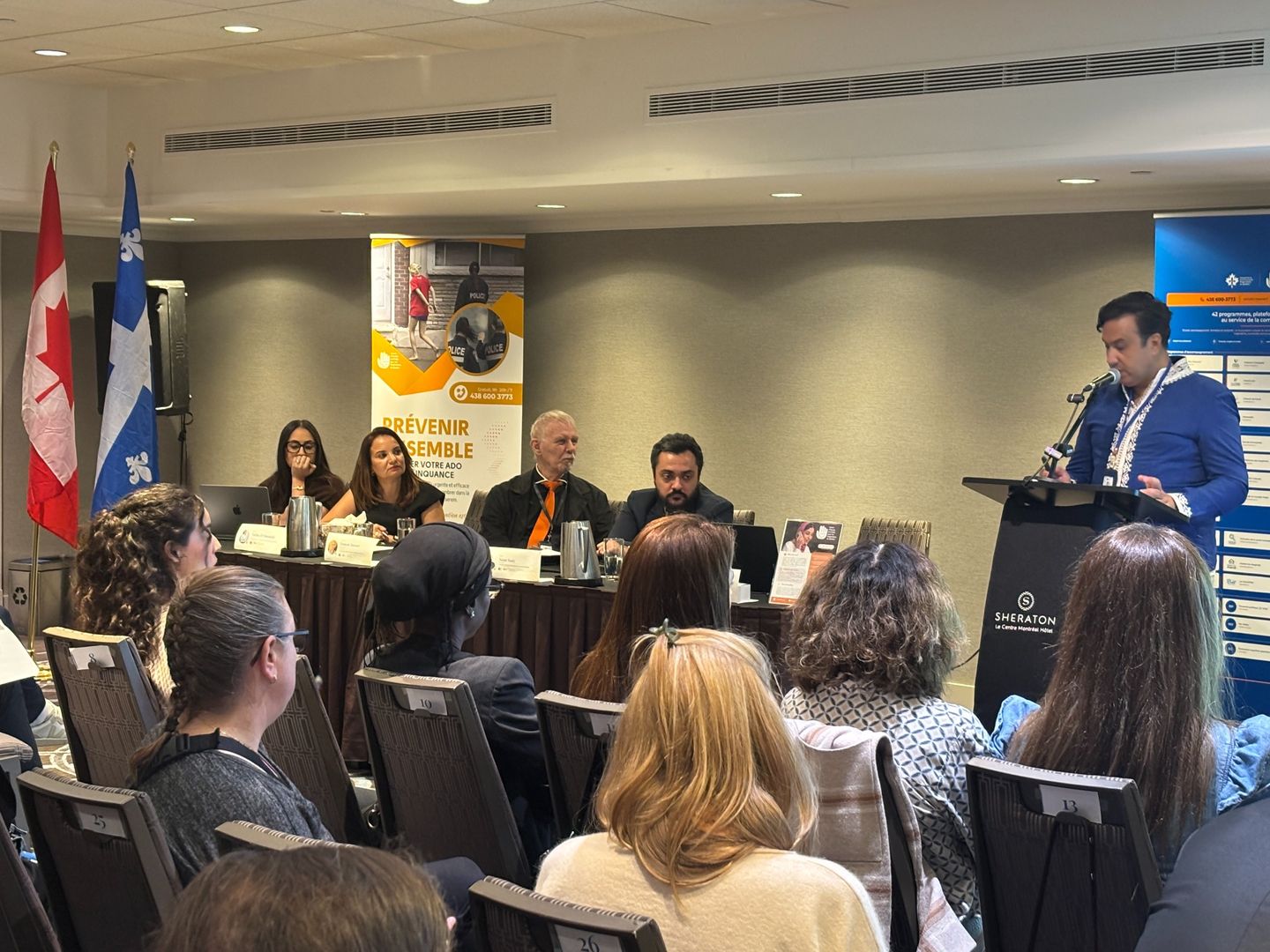
This is precisely one of the questions raised by the study Silent Voices, unveiled in Montreal on September 17. Conducted over nearly two years among young Quebecers of Maghrebi descent aged 15 to 29, this survey was carried out by the Centre d’écoute et d’aide pour les Maghrébins au Québec (CEAMQ), based notably on 1,608 anonymous questionnaires and 1,921 anonymized clinical reports.
Its most direct finding regarding this issue is striking: 62% of the young people surveyed say they do not know who to turn to when they are going through a difficult time. And only 2.6% cite a mental health professional among their resources. "Every percentage point is a closed door," said the study's director, El-Amine Serhani, during its presentation. The phrase summarizes the finding that runs throughout the study: the problem is not just one of young people who are suffering, but also of young people who do not always know who to talk to, how to ask for help, and who to trust.
The Invisible Suitcase
The study also looks at what can contribute to the distress of these young people: identity, sense of belonging, discrimination, family relationships, social isolation, and access to resources. Among the respondents, 72% believe their mental health is directly influenced by a lack of recognition of their multiple identities. More than half, or 53.6%, say they experience a form of "dual identity," caught between the expectations of their family and those of Quebec society.
This phenomenon does not mean that all young people of Maghrebi descent are experiencing an identity crisis or that their background is inherently a source of distress. Rather, the study seeks to document what happens when multiple affiliations, expectations, and social experiences intersect.
Mr. Serhani uses an image to explain this accumulation: that of the "invisible suitcase." "When we arrive in Quebec, we arrive with visible suitcases, but we also arrive with other suitcases that are invisible and that no one sees. Inside, there are our intergenerational traumas, because these are colonized countries, and there are also our fears, our beliefs, and our anxieties," he explains.
For him, the history of migration and family adds to the difficulties encountered after arriving in Quebec. He points to racial profiling, issues with the recognition of credentials, or even the effects of Bill 21, which can destabilize the environment in which children grow up. But how does this reality translate into the life of a young person?
"I'll handle it myself"
For Yanis, who grew up in Quebec, asking for help is simply not his first instinct. "I'm not going to go see someone every time I have a problem," he says. "I handle it myself in my head."
Yet he knows that resources exist, and he acknowledges that if a problem became too heavy for him, he might eventually seek professional help. For now, his first resort remains his family: his brother, but especially his father, who has always told him to consider him as much a friend as a parent.
His experience helps nuance that 62% figure—the proportion of young people who say they don't know who to turn to when they have problems. Not seeking professional help does not necessarily mean being completely isolated. The various paths show that "not knowing who to turn to" can cover very different situations. The study notes, moreover, that family and friends play an important role in the support strategies of the young people surveyed. But according to the study's authors, the problem arises when these networks are no longer enough.
"Many" need help
Marouane went through a period where loneliness took up a lot of space. He describes a gradual downward spiral, marked by daily alcohol and drug use and other inappropriate behaviors. Today, he looks back on that time with perspective, but notes that he wasn't really looking for a solution back then. "I wasn't even aware," he says. It was his mother who noticed something was wrong and encouraged him to return to prayer. Marouane then went to the mosque with a friend. He describes this spiritual experience as a turning point that helped him break out of the impasse.
As a child, he continues, his mother had sent him to see a psychologist because she found him unruly. But the experience left a bitter taste, and years later, he still didn't have the reflex to seek professional help.
Even today, when asked if he would seek psychological help if he needed it, he hesitates. On the other hand, he is familiar with organizations in his neighborhood and mentions the Forum jeunesse de Saint-Michel and a youth worker who helped him through music.
This distinction is important: knowing about neighborhood organizations does not necessarily mean knowing which mental health services are available. When asked if there is a need for help among the young people around him, his answer is clear: "A lot."
When the first contact doesn't work
Karim’s* journey is different. Having arrived in Quebec from Algeria at 14 or 15, he describes a period of disorientation as he had to learn new social codes, norms, and relationships. In the midst of adolescence, he felt he didn't know where he fit in. "What category did I belong to?" he says. For a long time, he didn't ask anyone for help. Family? "Never in a million years," he replies when asked if he could have turned to them. Friends? He didn't have any he felt close enough to open up to.
Gradually, Karim built a social network with other young immigrants. Around age 17, after hearing about available resources at school, he finally made an appointment with a social worker at the CLSC. The experience was limited to a single session—not because the resource wasn't available, but because he didn't understand what the process could do for him and didn't trust the approach, he explains.
Years later, as an adult, he had the opportunity to see a psychologist in a different context. But once again, the process was cut short after a few sessions, this time due to a breakdown in trust.
Karim’s story highlights another issue behind the low rate of professional help-seeking among young people of Maghrebi descent: what happens after the young person walks through the door? Finding a resource does not guarantee that a helping relationship can be established.
"Understand our context before trying to fix us"
This is where the analysis of Iman Sta-Ali, a doctoral student in clinical psychology at Université Laval and founder of the Centre Binetna (literally "between us" in Arabic), aligns with the findings of the "Voix silencieuses" study. According to her, young people don't always ask for psychological help directly. It is often parents or youth workers who reach out to the center on their behalf. To get some young people to open up, you sometimes have to start differently: with an activity, a project, or a space where they can feel comfortable before directly addressing their mental health. "They need to be heard by someone who understands their reality," she explains.
The Centre Binetna supports people from Maghrebi communities, particularly adolescents and young adults. For its coordinator, identity issues can play a role in the difficulties some young people experience. But she insists on another aspect: the problem isn't just the "taboo" surrounding mental health. Some parents, she says, may hesitate to approach institutions like the CLSC or the DPJ because they don't trust them enough. In these conditions, a community organization where they recognize their own reality can become a gateway.
The other issue is the adequacy of public mental health services for the reality of these young people. Do public services meet their needs? "I don't think so," says Ms.Ms. Sta-Ali. In this regard, she recalls a panel held two years ago where the question was whether the community avoided seeking help due to taboo or because they felt excluded. The latter hypothesis won out, she says. She adds that the practice of psychology is based on "studies done by white people for white people," which have shaped the therapeutic approaches taught today. However, she observes, these approaches "do not work" for other populations and can even "re-traumatize" or "re-victimize" those seeking help.
For El-Amine Serhani, this is also why the answer cannot simply be to tell young people to "go see someone." The study aims to bring a better understanding of cultural, family, and migration realities into the services. A phrase heard during the research summarizes this demand, according to him: "Understand our context before trying to fix us."
What the study reveals
This is precisely where the data from "Voix silencieuses" becomes important. The 62% of respondents who don't know where to turn are not all telling the same story.
The stories of Yanis, Marouane, and Karim obviously cannot be used to generalize the experience of all young people of Maghrebi descent. Instead, they show the different stages that can exist between the moment a young person is struggling and the moment they actually receive support. And it is precisely this intermediate zone that the study's figures make visible.
Alongside the 62%, another figure is striking: 50.5% of respondents say they are not comfortable talking about mental health with their parents. Nearly half also report social isolation. For Mr. Serhani, these results reveal a blind spot where some young people may be left alone with their struggles.
The study highlights how a young person might not find answers at home, may be unaware of professional resources, and may not feel understood within certain institutional settings.
However, the data does not suggest that all young people face these obstacles, nor that a single cause explains their mental health. Instead, it points to a collective struggle in ensuring that help actually reaches them.
The challenge is knowing which door to open.
This may be one of the key takeaways from "Silent Voices." Between the moment a young person realizes they are struggling and the moment they actually receive help, many doors may present themselves: family, friends, a community organization, a local clinic, or a psychologist. The challenge lies in knowing which one to open and being able to trust the person on the other side.
Yanis knows he could ask for help but prefers to handle his problems on his own for now. Marouane found support through his family, his faith, and local community workers, without ever knowing about specialized resources. As for Karim, he opened one door but didn't stay.
The 62% figure from the study takes on a new meaning. It doesn't tell a single story, but rather describes a series of paths that were interrupted, diverted, or never taken at all.
For El-Amine Serhani, the real issue is not waiting until a young person has exhausted all their own resources before suggesting they seek help. For the young people interviewed in Montreal, the question seems simpler: when things aren't going well, do they know who to talk to, and do they know they will be understood?
*At the request of the young participants, and due to the sensitive nature of this report, their first names have been changed.