

On November 2, the Service de police de la Ville de Montréal (SPVM) announced the administrative dismissal of seven police officers, including five assigned to neighborhood station 39 (PDQ 39) in Montreal North. The SPVM presents this decision as an exceptional measure taken in the public interest, but refuses to reveal the identities of the officers involved, citing the confidentiality of files and the protection of ongoing investigations. For residents of the neighborhood who demand to know who exercised police authority under such serious circumstances, this anonymity leaves one question unanswered: among the dismissed officers, are there those who dealt with the people reporting abuse? It also raises a complex legal issue: where is the line between the protection of personal information and the public's right to information?
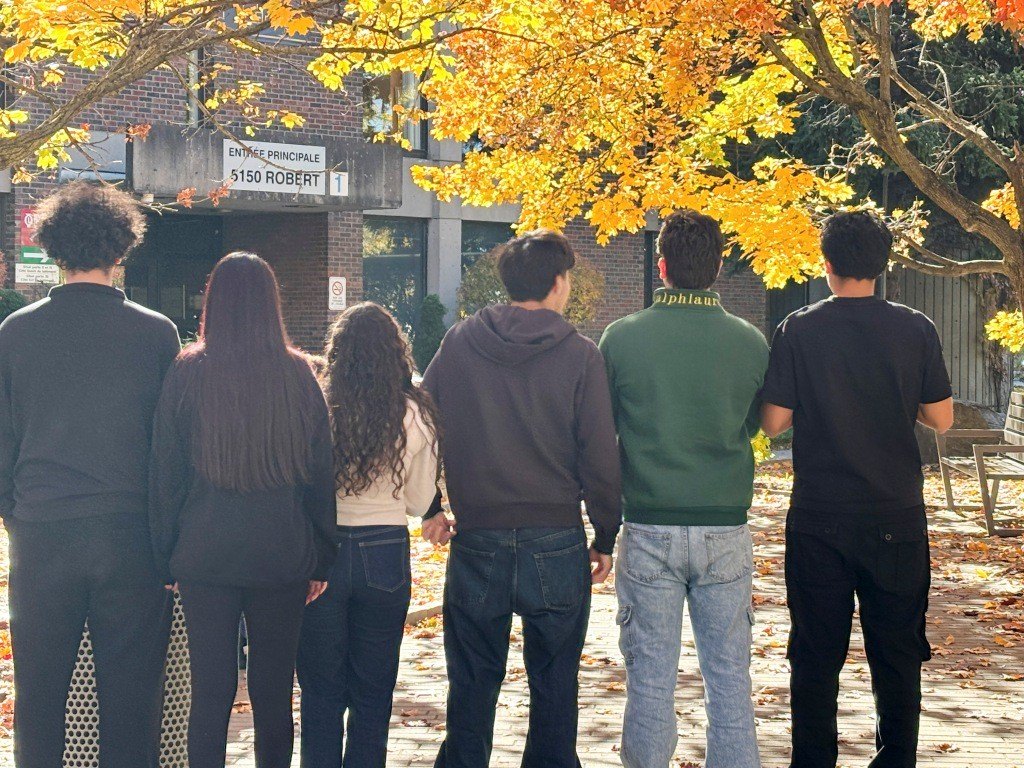
At Cégep Marie-Victorin in Montreal North, a conversation started among three students regarding the dismissals announced by the director of the Service de police de la Ville de Montréal (SPVM), Fady Dagher. In early November, after eating at the cafeteria, the three friends sat outside to enjoy the mild day. One of them, Aiden, has been following the revelations about neighborhood station 39. Another, Evens, is learning about the case through their discussion. But one question keeps coming up: why are the names of the dismissed officers not known?
Aiden does not understand why the SPVM is keeping their identities confidential. "They should be known by everyone," he believes. This question takes on particular significance for people who claim to have been subjected to abusive police interventions. Samuel Benche, a resident of the neighborhood, says he has been stopped by the police numerous times throughout his life. In a previous interview with La Converse, conducted following the PDQ 39 scandal, he estimated the number to be around a hundred. "I've often been stopped, I've been put in police cars, questioned. I'd say at least a hundred times," he recounted. He also says he has been a victim of police violence on several occasions. Without knowing if the officers who stopped or assaulted him are among the seven dismissed, he believes that knowing their identities could allow him to see if there is a connection and, if so, to take action. "If I had the necessary information to go to court—I'm an activist—I would go all the way," he asserts. When asked if he would initiate proceedings if one of the targeted officers was involved in the events he experienced, he answers without hesitation: "100%."
For Samuel, the issue is also one of safety in public spaces. He does not know who the dismissed officers are or if he has ever dealt with any of them. "I don't feel safe outside when I don't have those names," he says. He believes that neighborhood residents, especially those who frequent Place Pascal, should also be able to know their identities. He does not claim to speak for everyone, but says he is often approached by people who are hesitant to publicly report what they have experienced.
An administrative sanction, not a conviction
On November 2, Fady Dagher announced the dismissal of seven police officers : five from PDQ 39 in Montreal North and two from PDQ 21 in the city center. He presented this decision as a first in the history of the SPVM. He explained that it was linked to allegations of discriminatory and racist behavior as well as actions targeting vulnerable people. He also emphasized the intentionally malicious nature of the condemned behaviors to justify these measures.
These dismissals, however, do not constitute criminal convictions. They result from the revocation of the officers' security clearance, following a reassessment of their fitness to perform their duties with regard to, among other things, requirements of good conduct and good reputation. In a press conference, the SPVM director explained that the revocation of this clearance led to their administrative dismissal. He also specified that criminal investigations were continuing and that the files had been forwarded to the Director of Criminal and Penal Prosecutions (DPCP). The officers involved have, for their part, contested their dismissal and filed a complaint with the Police Ethics Commissioner against the head of the SPVM.
For Samuel, this sanction remains insufficient. "I don't see it as hope yet," he says. He acknowledges that the dismissals might deter some officers, but believes they do not, by themselves, guarantee that the condemned acts will not be repeated. "There is nothing that assures me that, tomorrow, what was committed yesterday won't happen again," he adds. He wants the individuals involved to also answer for their actions before the courts, if the investigations establish that offenses were committed.
Why are the names being kept confidential?
The SPVM justifies its refusal to disclose the officers' identities by citing the confidentiality of employee files. In a written response sent to La Converse, its media relations department stated the following: "As these are administrative dismissals and employee files are confidential under the Act respecting Access to documents held by public bodies and the Protection of personal information, we cannot reveal the identities of the individuals concerned."
The SPVM also cites ongoing investigations. "This decision is based both on legal provisions and on the need to preserve the integrity of the investigative work—which is ongoing—and to prevent any influence on a potential judicial, ethical, or disciplinary process," it specified. However, the SPVM did not cite the specific sections of the law that would justify the non-disclosure of the names. It also did not specify how publishing the officers' identities could compromise investigations or potential legal proceedings.
The law mentioned above does indeed provide for a principle of confidentiality. Section 53 stipulates that personal information is confidential, except in certain situations, notably when the person concerned consents to its disclosure. That said, Section 57 provides for cases where personal information, such as the name, title, and duties of a member of a public body's staff, may be public in nature. This rule, however, has an exception: such information loses its public character if its disclosure is likely to harm or hinder the work of a person or body responsible for preventing, detecting, or suppressing crime.
Furthermore, Section 28 of this law provides for restrictions on access to certain information held in the exercise of functions for the prevention, detection, or suppression of crime. A body must, in particular, refuse to communicate information when its disclosure is likely to hinder an ongoing investigation, compromise judicial proceedings, or jeopardize the safety of a person.
A balance that courts may need to define
To shed light on this issue, La Converse sought the expertise of several lawyers and academic researchers specializing in labor law and access to personal information, who, in turn, did not wish to comment on this case, including the CSN's legal department. André Ouimet, a retired lawyer and associate professor at the Université de Sherbrooke's Faculty of Law, did agree to answer our questions. His expertise in access to information and the protection of personal information is based in part on 17 years spent at the Commission d’accès à l’information du Québec, where he served as secretary and director of legal services.
Regarding Section 57, which highlights the public nature of certain personal information relating to employees of public bodies, such as names, he warns against reading it in isolation. "You cannot isolate one section. The law is a whole," he reminds us.
According to him, the legislator sought to reconcile two objectives: allowing access to administrative documents and protecting personal information, a component of the right to privacy. This distinction is fundamental. In the part of the law devoted to access to administrative documents, the principle is one of access, subject to the provided exceptions. Regarding personal information, the principle is reversed: confidentiality prevails, except when a provision authorizes disclosure.
Section 57 is one of those exceptions, as it establishes the public nature of certain information regarding staff members of public bodies. But, explains André Ouimet, the fact that information is public in one context does not mean it remains so when associated with other personal information.
Does the law still apply to police officers after their dismissal? "Yes, the law still applies. Are they right? That is not for me to say. It is a tribunal, the Commission d’accès à l’information, that could say, after examining the file, whether this information has a public character or not," he replies.
The professor therefore does not comment on the legality of the SPVM's decision. He acknowledges, however, that in the case of an employee of a public body, the line between information that should be public and that which remains confidential is particularly delicate. "We are finding this balance even more delicate," he observes. For him, this balance is not permanently fixed. Administrative and judicial courts are called upon to interpret the provisions and determine, through appeals, how to apply them to concrete situations. He points out that cases have already been taken to the Supreme Court in disputes regarding access to information about state employees.
This reading does not allow us to conclude that the SPVM is necessarily justified in keeping the names secret, nor to state that the law mandates their publication. However, the Service does not rule out the possibility that the names could become public later. The SPVM indicated to La Converse that, "if there were eventually court appearances, the identities of the individuals and information related to judicial files entered in the court docket would be public and available for free consultation at the courthouse."
Transparency is not limited to names
Not everyone in Montreal North shares the demand for the publication of the dismissed officers' identities. Jude Alain-Mathieu, a youth worker in the neighborhood, believes that the risks this disclosure could pose to the officers involved must also be taken into consideration. "I think it is prudent not to disclose them because there is a risk to their health and safety that I believe is unnecessary," he says. In his view, the loss of their jobs is already a significant sanction. His perspective serves as a reminder that transparency cannot be considered without taking into account the rights and safety of the individuals involved.
For Massimiliano Mulone, an associate professor at the School of Criminology at the Université de Montréal, the question of the SPVM's accountability should not, however, be limited to the fate of the seven officers. He insists on the need to make more information accessible to allow the public and authorities to evaluate the institution's practices. Mr. Mulone, who contributed alongside researchers Victor Armony, Mariam Hassani, and Alicia Boatswain-Kyte to the reports on police stops and racial profiling in Montreal – presented before the City’s public safety commission and concluding that the practice is discriminatory – criticizes, among other things, the SPVM’s refusal to grant researchers access to data from recent years held by the Service.
He points out that the SPVM has previously provided researchers with anonymized databases, which allowed for the study of police interventions without identifying the individuals involved. This experience shows, in his view, that there are ways to make certain information accessible while protecting personal information. "The police should be so legitimate in our society that they shouldn't be afraid to question themselves," he believes. He also argues that it is up to municipal authorities to demand greater transparency from the SPVM, rather than letting the department decide on its own what information is made public.
Cassandra Exumé, general coordinator of the community organization Hoodstock, emphasizes the need to examine responsibilities beyond the officers directly involved. Dismissals alone, she says, do not change the daily lives of young people, who continue to report experiences of profiling and a sense of insecurity during police interactions. "It doesn't change their day-to-day reality," she summarizes.
For Hoodstock, the review must also focus on the chain of command and supervision mechanisms. "If we reach a point where a police officer can scalp members of the Black community, it means there are failures higher up," asserts Cassandra Exumé. Her organization is calling for an independent public inquiry commission so that institutional responsibilities and practices can be examined more broadly.
These interventions do not directly answer the question of whether the names of the seven police officers should be made public. However, they serve as a reminder that accountability is not limited to the disclosure of identities.
The SPVM has announced a sanction it describes as historic. But as long as the identities remain confidential, some of the questions raised by the residents of Montreal North remain unanswered. Samuel Benche does not know if the officers who stopped or assaulted him are among the seven dismissed. He would like to be able to verify this and, if necessary, take action.